BMW Brings Humanoid Robots to European Production Lines
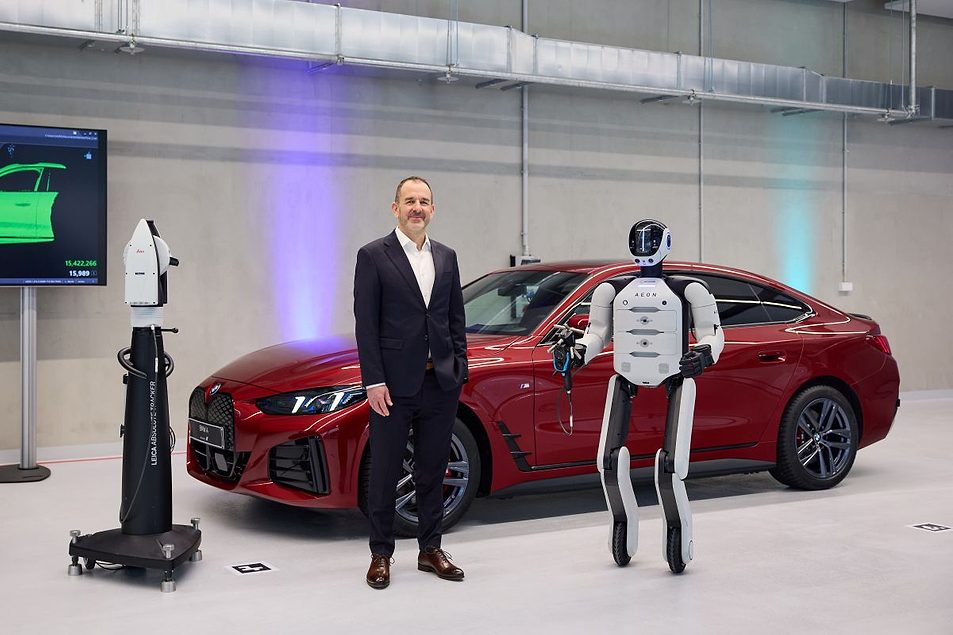
In a move that signals a major shift in automotive manufacturing, BMW has announced it will deploy humanoid robots in its European production facilities. The German automaker is assigning two Aeon robots — manufactured by Hexagon Robotics — to work in production later this year, following a successful test deployment at BMW's Leipzig factory.
Why Humanoid Robots, Why Now?
Robotic arms and other forms of automation have been used in the automotive industry for decades. But traditional automation requires factories to redesign entire assembly lines when production processes change. Humanoid robots offer a fundamentally different value proposition: they can step directly into roles currently filled by human workers, without any need to reconfigure the production line.
"This will be the future of automotive production," said Michael Nikolaides, head of process management and digitalisation at BMW.
The humanoid form factor means these robots can navigate existing workspaces, use human-designed tools, and perform tasks that would otherwise require expensive line redesigns. For supply chain professionals, this represents a paradigm shift in how factory automation is planned and budgeted.
What the Aeon Robots Can Do
The Aeon robots are human-shaped machines that stand approximately 1.65 metres tall (5 feet 5 inches) and weigh about 60 kg (132 pounds). They are designed for the industrial floor with impressive specifications:
- Speed: Tops out at nearly 2.4 metres per second (8 feet per second)
- Payload: Can carry 15 kg (33 lbs) for short periods, or 8 kg (18 lbs) continuously
- Sensors: 21 sensors including cameras, radar, microphone, and force/torque sensors for precise manipulation
- Battery: 3-hour battery life, but the robot can swap its own battery in about 3 minutes — including travel to and from the charging station
- Training: BMW trained the robots using teleoperation (sensors on human workers) combined with simulation in a digital twin of the factory, powered by Nvidia AI software
At BMW's plant, the Aeon robots will feed parts to manufacturing tools and conduct pick-and-place tasks for battery assembly — roles that are repetitive and physically demanding, making them ideal candidates for automation.
The Broader Industry Shift
BMW is far from alone in betting on humanoid robotics. The automotive sector is seeing a wave of similar initiatives:
- Toyota plans to deploy Digit humanoid robots from Agility Robotics following successful trials
- Xiaomi has tested two of its own humanoid robots in electric vehicle production in China
- Hyundai — already using Spot robots for industrial inspection — announced plans in January to deploy Atlas humanoid robots from Boston Dynamics, in which Hyundai is a majority shareholder
- BMW already has experience with humanoid robots at its Spartanburg, South Carolina plant, where the Figure O2 robot helped build 30,000 units of the X3 model
Supply Chain Implications
For supply chain leaders, the rise of humanoid robotics in manufacturing carries several strategic implications:
Workforce planning. The ability to deploy humanoid robots without redesigning production lines changes the ROI calculus for automation. Companies can now automate labor-intensive tasks incrementally, rather than waiting for greenfield factory projects.
Supply chain resilience. Humanoid robots can help manufacturers respond faster to demand fluctuations. Instead of struggling to hire and train workers during production spikes, manufacturers can scale robot deployments with greater predictability.
Battery and electronics supply chains. The battery swapping capability — a 3-minute process — shows how robot design itself is evolving to minimize downtime. This has implications for how factories plan maintenance, stock spare parts, and manage consumables.
Training infrastructure. The use of digital twins and Nvidia's AI platforms for robot training highlights an emerging intersection between simulation technology and physical operations. Supply chain teams involved in facility planning will increasingly need to work with digital modeling tools.
The Bottom Line
BMW's deployment of humanoid robots marks a milestone in the journey from factory floor experimentation to mainstream adoption. While the initial deployment — two robots in a single plant — may seem modest, it represents a strategic bet that the humanoid form factor is the next natural step in manufacturing automation.
As the technology matures and costs come down, the question for supply chain professionals will shift from "should we use humanoid robots?" to "where in our operations do they deliver the greatest value?"
Source: SupplyChainBrain — BMW to Use Humanoid Robots to Make Cars in Europe