The supply chain AI conversation tends to oscillate between two equally unhelpful extremes. One camp insists that artificial intelligence is about to revolutionise everything overnight. The other camp insists that the technology is overhyped and that meaningful deployment is still five years away.
Walmart is living proof that both camps are wrong.
The world’s largest retailer, with over $648 billion in annual revenue and a supply chain that touches more than 10,500 stores and clubs across 20 countries, is not experimenting with AI. It is not piloting AI. It is not “exploring” AI. It is running AI at full operational scale today, and the results are measurable enough that the company has made it central to its long-term strategy communication.
The Digital Twin That Never Sleeps
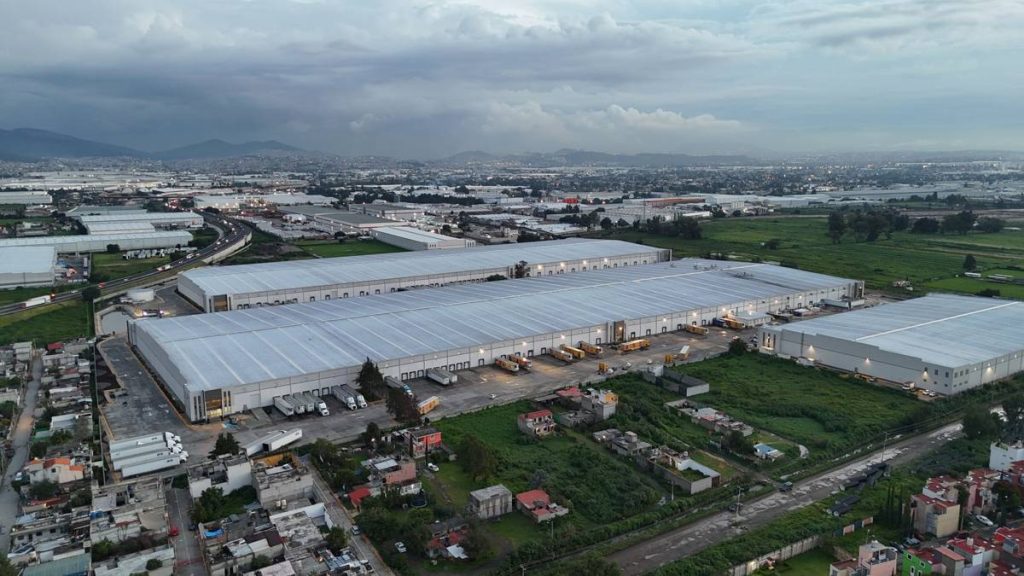
The centrepiece of Walmart’s AI strategy is a digital twin of its supply chain: a real-time virtual replica that mirrors every distribution centre, every truck, every store, and every product flow across the network. This is not a dashboard. It is not a PowerPoint slide. It is an operational control system that runs continuously, ingests data from thousands of sources, and recommends routing decisions, inventory positioning, and labour allocation in real time.
When a geopolitical event disrupts a shipping lane (a Red Sea incident, a Panama Canal drought, a port strike on the US East Coast) the digital twin recalculates the optimal network configuration within minutes. It does not wait for a human to notice the disruption and escalate it. The model sees the change in transit times, the shift in costs, the ripple effect on inventory coverage, and it proposes alternatives before most supply chain managers have finished reading the morning news alert.
When extreme weather threatens a distribution centre (a hurricane bearing down on the Gulf Coast, a winter storm closing highways in the Midwest) the digital twin reroutes inventory to alternate facilities preemptively. It does not react after the roads are closed. It anticipates the closure based on weather models and moves the product before the trucks would be stuck.
From Prediction to Execution
The common objection to AI in supply chain is that prediction is easy but execution is hard. Any model can tell you that a storm is coming. The question is whether the system can actually move the inventory before the storm arrives.
Walmart has closed this loop. Its AI does not stop at forecasting. It triggers automated workflows: purchase orders are adjusted, truck routes are reassigned, warehouse labour is reallocated, store delivery schedules are rewritten. The digital twin is connected to the execution systems, not sitting in a separate room producing reports that nobody acts on.
This end-to-end integration is the difference between theoretical AI and operational AI. Most supply chain organisations have invested heavily in the prediction layer: demand forecasting, inventory optimisation, route planning, but have not connected those predictions to the execution layer that actually moves product. The forecast says “increase safety stock for these 200 SKUs” but nobody changes the purchase order. The model says “reroute these 15 trucks” but the dispatcher does not have the authority or the tools to make the change.
Walmart has solved the integration problem not through a single magical platform but through years of incremental investment in data standardisation, API connectivity, and operational discipline. The digital twin works because the underlying data is clean, the systems are connected, and the organisation trusts the output enough to act on it.
What This Means for Every Other Supply Chain
Walmart’s example is simultaneously encouraging and daunting. The encouraging part is that the technology is real and proven at the largest possible scale. The digital twin concept is not a vendor fantasy. It is running in production today, delivering measurable results, and being expanded into new areas of the business.
The daunting part is what it took to get there. Walmart’s AI capability rests on a foundation of two decades of supply chain data standardisation, a massive internal technology organisation, and a culture that has gradually shifted from intuition-based to data-driven decision-making. The digital twin is not a shortcut. It is the culmination of a long, unglamorous journey of getting the fundamentals right.
The lesson for supply chain leaders is not that they need to build what Walmart built. Most organisations lack the scale and the resources. The lesson is that the path to operational AI is the same regardless of size. Clean the data. Connect the systems. Build the trust. Start with one use case, prove it works, and expand from there.
AI in supply chain is not five years away. It is already here, running the world’s largest retail supply chain at machine speed. The question is not whether the technology works. It is whether your organisation is ready to do the work required to make it work for you.