
Imagine a supplier offering to get a load of framing lumber to a jobsite before noon. The foreman asks for 9 to 10 instead. The first offer sounds more flexible, but only for the supplier. The foreman has an unloading spot available for an hour, and the crew needs the lumber before it can start the next wall.
If the truck comes at eight, the crew may have to break off another task to clear a place for it. If it comes at eleven, the wall waits. Both arrivals satisfy “before noon.” Neither gives the foreman enough information to plan the morning.

A good delivery promise tells the customer when work can begin.
Why the store isn’t always the right starting point
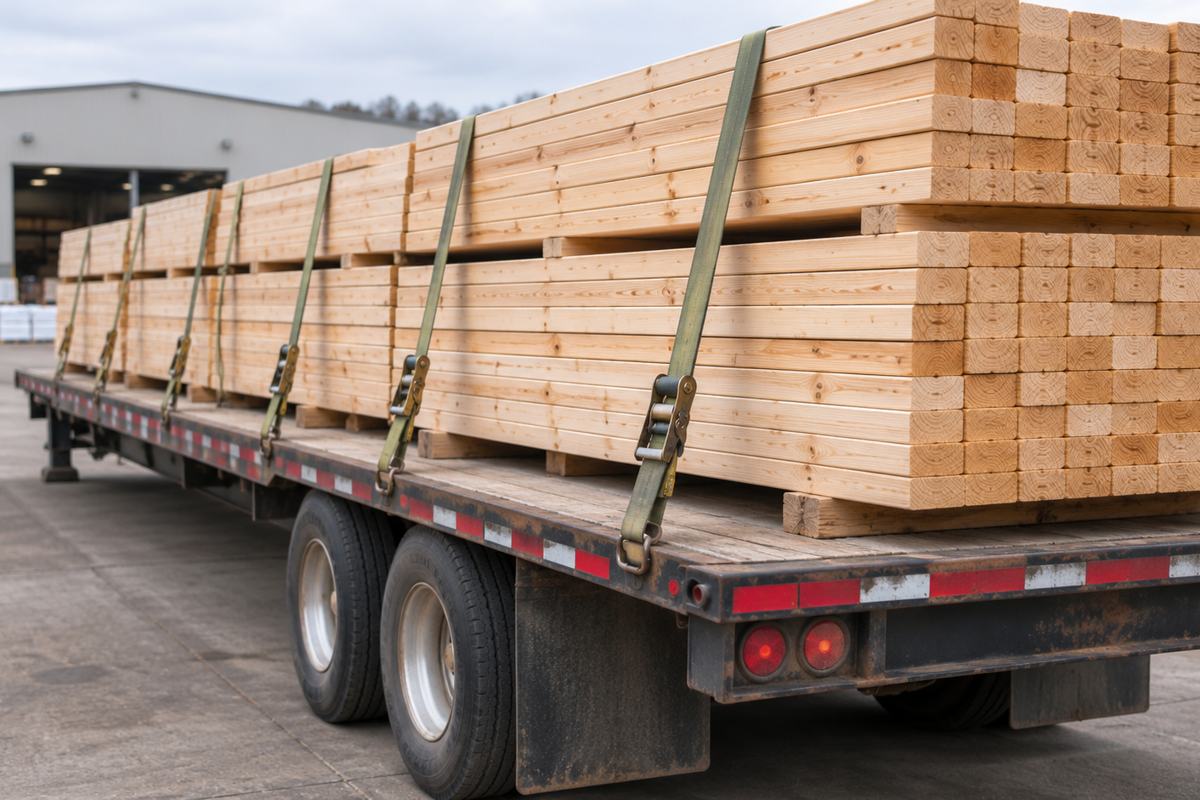
The Home Depot has built a separate fulfillment network for the large orders contractors need on site. Its flatbed distribution center in Westminster, Massachusetts, is a useful example. The company says the facility spans 1.1 million square feet and holds building materials in quantities suitable for entire jobs. Trucks can take those orders directly to active jobsites rather than drawing the material from the shelves of a neighborhood store.
A store is still a good place to pick up a box of fasteners. Pulling enough lumber for a framing job is a different operation. It takes room to assemble the load and equipment to handle it. It also competes with ordinary store work. The flatbed center gives the retailer a place to stock and stage bulky materials without asking the store to perform both jobs.
The Home Depot says contractors can schedule deliveries, with same-day or next-day service on eligible items. Customers can also track trucks. The two capabilities solve different problems. A scheduled window gives the foreman something to plan around. Tracking gives the foreman a chance to change that plan if the truck is running late. Neither helps much if the load arrives missing the material that the crew needs first.
Put a price on the missed hour
Suppose four people on a framing crew each cost $45 an hour, including labor overhead. If a missed delivery window leaves the entire crew idle for one hour, that’s $180 before counting any equipment rental or knock-on delay. Those numbers are illustrative, not Home Depot results. They explain why a contractor might rationally pay more for a dependable window on one order and choose the cheapest service on another.

The same calculation can cut the other way. If the foreman can move everyone to another task, the waiting cost may be small. If the crew isn’t due until tomorrow and there’s a safe place to store the load, a broad delivery window may be perfectly adequate. Buying a tight appointment for every order would tie up vehicle capacity and make route planning harder without doing much for the customer.
That’s why an order needs a usable window as well as a requested date. Dispatch needs to know when the site can receive the truck, who can accept the load, and what equipment the site expects the hauler to bring. Sales needs to know which part of a split order would stop the job. If one missing item holds up the work, shipping everything else early can make the supplier’s numbers look better without helping the crew.
Measure the handoff, not the truck arrival
For a pilot, pick one market and one category of orders that regularly hold up work. Let the customer book a window the site can actually receive. Confirm the material and a truck slot before promising it. If dispatch sees the order will miss, contact the foreman while there’s still time to shift the crew or rebook the receiving slot. A tracking link is useful, but it doesn’t take responsibility for that call.
Keep the original promise in the record even if both sides agree a new time. Otherwise a dispatcher can move an appointment and make a late delivery look on time. Record when the required material was unloaded and available, then record why the handoff failed if it did. A truck that reaches the gate on time but can’t unload because the site isn’t ready has a different problem from a truck carrying the wrong material. The two failures need different fixes.
Compare orders delivered complete and usable within the original window with the cost to serve them. Ask a few foremen whether late or incomplete loads actually interrupted work. If a narrower window costs more and rarely changes what the crew can do, widen it. If misses keep leaving people or equipment idle, protect that delivery slot before paying to make the whole route faster.
Start with one order tomorrow. Ask the receiver what work depends on it, and when the material needs to be off the truck. The answer is the time your operation should be planning to meet.