
A global retailer spent $47 million on a new warehouse management system. The software was tested for eight months. The hardware was installed on schedule. The project team won an internal award for execution excellence. Six months after go-live, pick rates were down 18 percent and error rates had doubled. The system was doing exactly what it was designed to do. The problem was that nobody wanted to use it.
This story repeats across supply chains every year. Not because the technology is bad. Not because the business case is wrong. Because the people side of change is treated as an afterthought.
The one thing that determines whether a supply chain transformation succeeds or fails has nothing to do with the software. It has everything to do with one question that most leaders forget to ask.
People do not resist change. They resist change they see no personal value in.
Deb Boelkes, author of The WOW Factor Workplace, puts it simply: people want to work with those who exude a can-do attitude, demonstrate the knowledge and confidence to create success, and willingly share the limelight. Once people know what is in it for them, big plans can inspire volunteers to eagerly jump on board.
That last part is the one most supply chain leaders miss. They invest millions in systems and processes. They communicate the strategic rationale. They set KPIs and milestones. What they forget is the most basic human motivator: showing each person, in their own terms, how this change makes their work life better.
The statistics are unforgiving. McKinsey has tracked transformation success rates for two decades and the number has barely moved. Roughly 70 percent of large-scale change initiatives fail to achieve their objectives. The technology works in almost every case. The failure is consistently on the people side. Gartner reports that 63 percent of supply chain leaders identify change management as their single biggest capability gap. Not data analytics. Not AI. Not automation. The ability to bring people along.
The Sinatra Test for supply chain change management is Toyota. Toyota’s production system has been studied, benchmarked, and copied for decades. Every lean transformation in manufacturing traces back to one principle: the people doing the work must see the benefit first. Toyota does not roll out a new process without answering one question for every team member. What is in it for you? Not the company. Not the customer. You. If Toyota, the most operationally sophisticated company on earth, starts with WIIFY, every other organization can too.
Consider what happens when this principle is ignored. A senior planner at a European chemical company had used the same planning process for 14 years. She knew which customers would spike demand before the data did. She knew which suppliers delivered early and which delivered late. When the company announced a new AI-driven planning platform, she was told it would make her job easier. She heard something different. She heard that 14 years of instinct were being replaced by an algorithm. Nobody asked her what she needed. Nobody showed her what the system could do for her specifically. She stopped flagging risks. She stopped suggesting improvements. She did exactly what the system told her, nothing more and nothing less. An $8 million investment delivered half of what was promised.

Now compare that to a different story. A mid-sized logistics provider decided to implement a new transportation management system. The technology was proven. The business case was solid. The project followed every textbook change management practice. Town halls. Newsletters. Training sessions. Adoption stalled at 40 percent.
A new warehouse manager took a different approach. She did not start with the system. She started with the people. She spent two weeks on the floor watching and asking one question: what frustrates you most about your day?
She heard about the double data entry. The manual status updates. The endless email chains trying to locate a shipment. She mapped each frustration to a specific feature in the new TMS. Then she went back to each person and showed them, directly, how the system solved their specific problem.
For Maria in receiving, it meant the end of handwritten dock receipts. For James in dispatch, it meant no more radio calls to find a trailer location. For Priya in customer service, it meant answering the where is my shipment question with one click instead of three phone calls.
Adoption hit 92 percent in six weeks. The project delivered its full ROI eight months ahead of schedule.
Here is where the limelight comes in. The warehouse manager shared credit at every opportunity. She mentioned Maria by name in the monthly review. She thanked James in the team meeting. She sent Priya to present the results at the regional conference. When the next phase launched, people volunteered for the pilot team instead of waiting to be assigned.
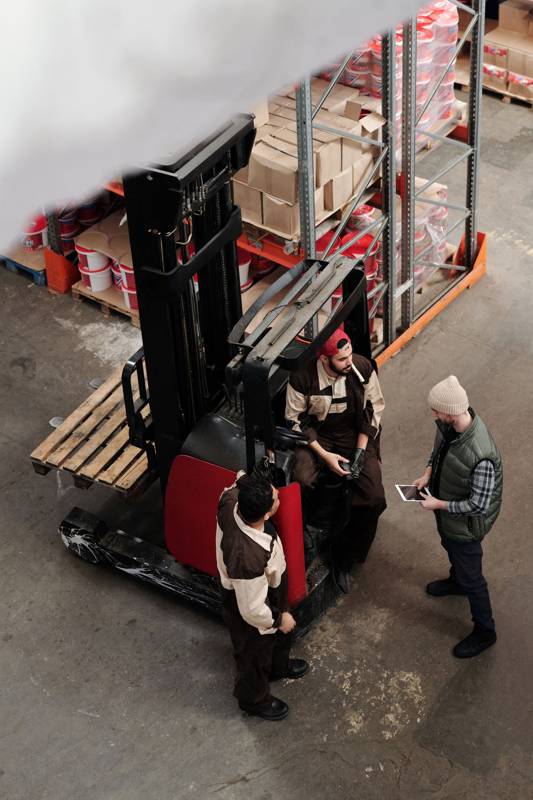
That is Boelkes WOW factor in action. A can-do attitude built not by slogans but by showing people the specific value in front of them. Knowledge and confidence demonstrated through direct problem solving. A reputation for getting things done while making the process human. And a leader who shared the spotlight instead of standing in it alone.
The next time your organization plans a supply chain initiative, start with one question before any technology decision. What is in it for the person whose job will change most? Then show them the answer. Not in a company newsletter. In their terms. On their timeline. That is where the WOW factor begins.