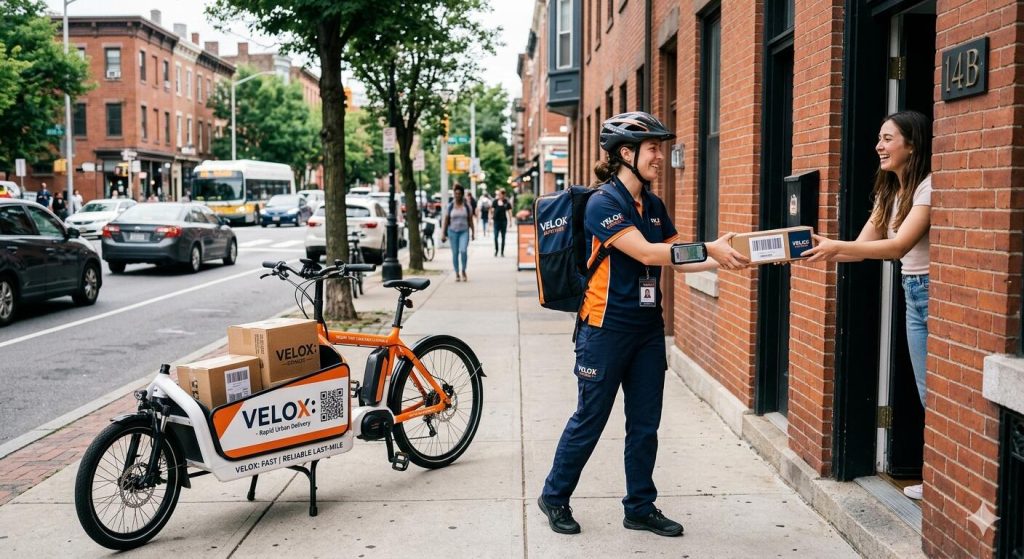
The last mile has always been the expensive mile. It accounts for over half of total shipping costs, eats up margins, and frustrates customers when it goes wrong. For years the playbook was simple: throw more vans at the problem, offer free shipping, and hope the economics work out. That era is ending. Three very different companies have quietly rewritten the rules in the last 18 months, and their approaches reveal something surprising about where the last mile is headed.
The Density Advantage: Dollar General’s Unexpected Edge
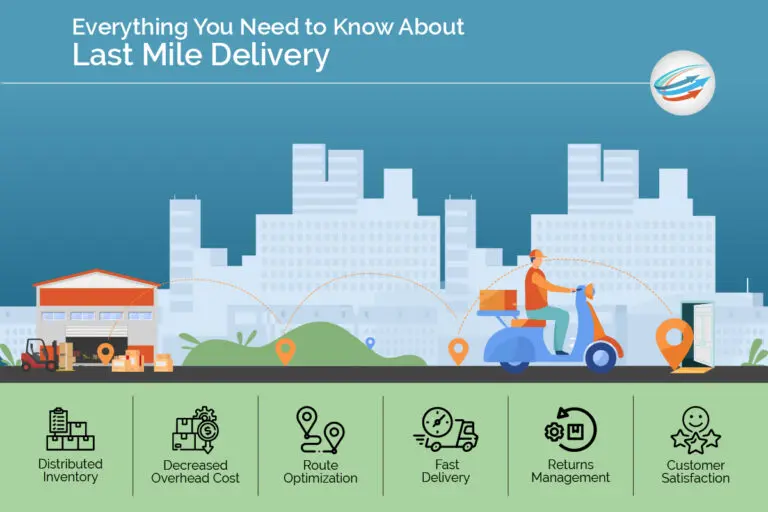
When Dollar General announced last year that it would add same day delivery to over 12,000 stores, most analysts yawned. Dollar General is a dollar store. What could it possibly teach the logistics world? A lot, it turns out. The average Dollar General serves a community within a five minute drive of 75 percent of the US population. No other retailer, not even Amazon, has that kind of proximity. By turning every store into a mini fulfillment center, Dollar General bypassed the central warehouse problem entirely. Orders travel less than a mile from shelf to doorstep in most cases. The result is delivery costs that are a fraction of what pure play ecommerce players pay, and delivery windows measured in hours rather than days. The lesson is counter intuitive: in a world obsessed with speed, proximity still beats velocity.
Amazon’s Robotic Gambit: Speed as Infrastructure

Amazon took the opposite approach. Instead of getting closer, it got faster. The company’s next generation same day delivery network, rolled out across 20 major metro areas this year, relies on a combination of AI driven inventory placement and robotic sortation centers that process packages in under 11 minutes from arrival to departure. The metric that matters internally is no longer cost per package but minutes from click to curb. Amazon is treating speed not as a feature but as infrastructure, the way a utility company treats electricity. The bet is that when delivery becomes indistinguishable from instant, consumer behavior shifts permanently. Early data suggests they are right. Same day delivery orders on the platform have grown by 40 percent year over year, and the average basket size for same day orders is 25 percent higher than standard delivery. Speed, it turns out, is not just expensive. It is profitable.
Nespresso’s Quiet Revolution: Loyalty Over Logistics
Nespresso took a third path entirely. Instead of competing on speed or proximity, the company redesigned the last mile experience around loyalty. Its subscription based capsule delivery program, which now accounts for over 60 percent of its online sales, uses predictive ordering to ship before the customer even realizes they are running low. The delivery window is not two hours; it is the exact time the customer prefers, down to the day of the week. Nespresso found that customers who receive deliveries on a predictable schedule have a retention rate 35 percent higher than those who order on demand. The insight is subtle but powerful: reliability beats speed in customer satisfaction surveys. A package that arrives at the expected time on the expected day outperforms a faster delivery that feels random. The last mile is not just about distance. It is about trust.
What the Three Approaches Reveal
Dollar General, Amazon, and Nespresso are not competing with each other. They sell different products to different customers. But their last mile strategies converge on a single truth: the old one size fits all model is dead. The future of last mile delivery is not about who has the most vans or the cheapest shipping rates. It is about who understands the specific geometry of their customer expectations. Proximity for one segment, speed for another, predictability for a third. The winners will be those who stop treating the last mile as a cost center and start treating it as a product in its own right, designed and priced differently for different customer needs.
The Bottom Line
The last mile arms race is getting shorter, but not in the way most people think. It is not about cutting delivery time from two days to two hours for everyone. It is about matching the right delivery model to the right customer expectation, and having the operational discipline to execute it consistently. Dollar General, Amazon, and Nespresso all reach the same destination, delivery to the doorstep, but they took completely different routes to get there. The playbook for the next decade will not be written by the company with the best technology or the most warehouses. It will be written by the company that understands that the last mile is not the end of the supply chain. It is the beginning of a relationship.