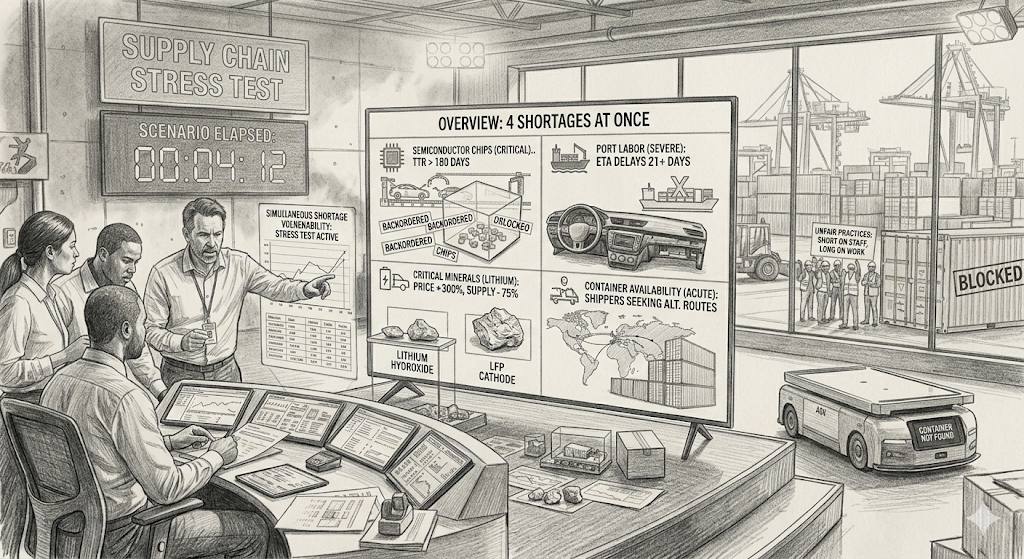
Shortages rarely arrive one at a time. In supply chains, they cluster. When climate, labor, policy, and infrastructure failures converge in the same quarter, the result is not a series of isolated problems. It is a systemic stress test.
Right now, four distinct shortage signals are flashing simultaneously across different sectors. Each is manageable on its own. Together, they reveal something deeper about how fragile global supply chains have become.
1. The Caribbean Hot Sauce Shortage
It sounds almost amusing, until you look at the data. A shortage of Caribbean hot sauce is not about condiments. It is about climate-driven agricultural disruption hitting a concentrated supply base. The peppers used in these sauces come from a small number of islands, each vulnerable to hurricanes, droughts, and soil degradation.
When a single crop fails in a single region, the entire global supply chain for that product stalls. The hot sauce shortage is a microcosm of what happens when agricultural supply chains lack geographic diversification. Coffee, cocoa, vanilla, and palm oil face the same vulnerability. The only difference is that those shortages make headlines.
2. The Tesla Labor Disruption in Sweden
A years-long strike at Tesla operations in Sweden has reached a critical juncture. The conflict, centered on collective bargaining rights, has disrupted not just Tesla production but the broader automotive supply ecosystem in Scandinavia.
Labor shortages are not new. But this dispute shows how quickly a focused labor action can cascade through just-in-time supply chains. When a single plant in Sweden cannot deliver, assembly lines in Germany, Belgium, and the Netherlands feel the pinch within days. The automotive industry, which spent decades optimizing for zero inventory, now faces the consequences of having no buffer for labor disruptions.
3. Tariff-Driven Capacity Crunch
US tariffs continue to reshape ocean freight markets. Wan Hai Lines recently stated that tariffs will support ocean demand and keep rates high. This is good news for carriers but a growing problem for shippers.
Higher rates mean tighter capacity. When ocean freight becomes expensive, companies hoard container space, book extra allocations, and over-order to hedge against further price increases. This artificial demand creates a self-fulfilling capacity shortage. The result is a market where rates stay high not because of real demand, but because of fear-driven behavior.
4. The Automotive Infrastructure Gap
The Port of Charleston is expanding its automotive cargo capacity, signaling a recognition that existing infrastructure cannot handle the volume of vehicles moving through the Southeast US. Automotive supply chains, already strained by the EV transition, semiconductor allocations, and labor disputes, now face a physical bottleneck at the dock.
Port infrastructure is not built overnight. The Charleston expansion will take years. Until then, automotive importers will compete for limited dock space, driving up costs and delaying shipments. For an industry operating on thin margins and tight production schedules, this is a structural risk with no quick fix.
The Common Thread
These four shortages share a common root cause: concentration risk. Each one stems from a system that optimized for efficiency at the expense of redundancy.
The hot sauce shortage is a geographic concentration problem. The Tesla strike is a labor concentration problem. The tariff-driven capacity crunch is a modal concentration problem. The Charleston infrastructure gap is a physical concentration problem.
In each case, the solution is the same: build buffers. Diversify suppliers. Invest in alternative routes. Maintain strategic inventory. These are not new ideas. But they are expensive ideas, and most companies only embrace them after a crisis proves the cost of not having them.
What to Watch
For supply chain professionals, the next six months will test whether the lessons of the pandemic have been internalized or forgotten. If these four shortages spread or converge, the fragility of the current system will become impossible to ignore.
The question is not whether another shortage will hit. It is which one will hit next, and whether your supply chain is ready for it.