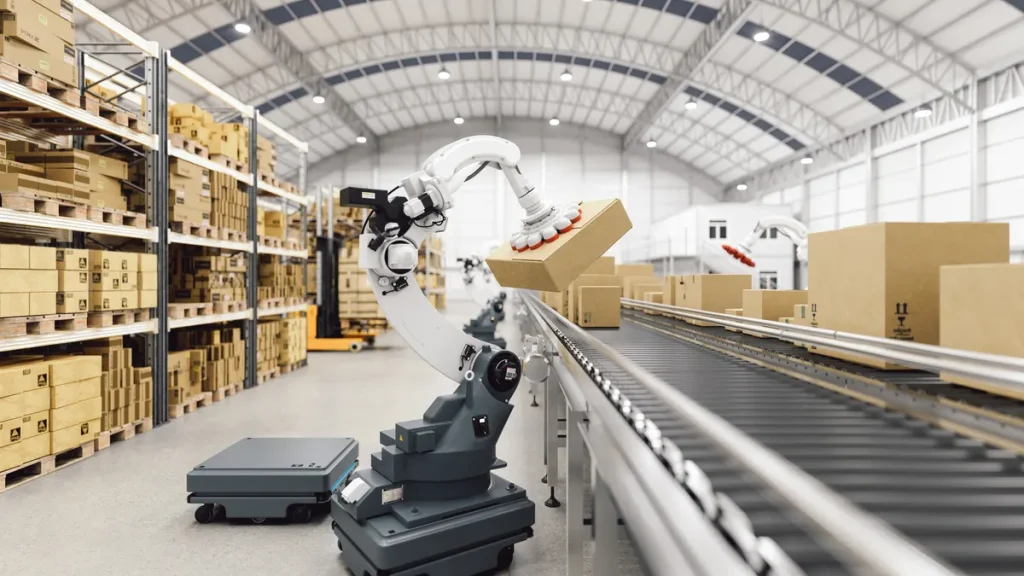
The warehouse robotics industry has experienced explosive growth over the past several years. Walk into any modern distribution center and you will see autonomous mobile vehicles gliding across the floor, robotic arms sorting packages at lightning speed, and automated guided vehicles following precise paths through dense storage aisles. But here is a truth that many operators overlook: the physical robot is only half the story. The real competitive advantage comes from what runs inside those machines and how they connect to the broader digital ecosystem.
Hardware Is Just the Beginning
When companies invest in warehouse automation, the natural instinct is to focus on the tangible hardware. The robots, the conveyors, the sorting systems. These are visible, measurable, and impressive pieces of engineering. But experienced operators know that the real transformation happens at the software layer. A pick assist autonomous mobile robot is only as valuable as the intelligence that directs it along the fastest route, prioritizes the most urgent orders, and adapts in real time to changing conditions on the warehouse floor.
This category of technology, sometimes called software robotics or software automation, represents a fundamental shift in how warehouses operate. Instead of programming robots to follow fixed routines, operators can now deploy intelligent systems that learn, adapt, and optimize continuously. The robot becomes the hand, but the software becomes the brain.
AI Makes Robots Adaptive Not Just Automated
The distinction between automation and intelligence matters enormously in warehouse operations. Automated guided vehicles have been around for decades, following magnetic tape or laser guides across predetermined routes. They are reliable, predictable, and limited. They do what they are told and nothing more.
AI powered robots are fundamentally different. They perceive their environment, make decisions, and adjust their behavior without human intervention. When a pallet falls in an aisle, an AI robot finds an alternative path. When order volumes spike unexpectedly, the system reallocates resources dynamically. When a new product line is introduced, the robot learns the new handling requirements without reprogramming.
Industry surveys confirm this shift. A majority of operations executives report that they have already integrated artificial intelligence into their warehouse robotics strategies in some form. The early adopters are moving beyond simple automation toward truly cognitive systems that can communicate with humans using natural language, understand context, and make judgment calls that were once the exclusive domain of experienced warehouse managers.
The Partnership Approach
Not every company needs to build its own AI capabilities from scratch. A growing number of warehouse operators are taking a partnership approach, working with technology vendors who specialize in robotics software. This model allows companies to deploy sophisticated AI powered systems without the burden of in house development. The vendor brings the algorithms and the training data, while the operator brings the domain expertise and the operational context.
Some of the largest retailers and logistics providers in the world are following this path. They are deploying autonomous forklifts that use AI to navigate complex environments, robotic depalletizers that can handle irregular packages, and intelligent sorting systems that learn from every item they process. These partnerships accelerate the pace of adoption far beyond what any single company could achieve alone.
The Cognitive Warehouse
The ultimate vision for warehouse robotics is the cognitive warehouse. In this model, every robot, sensor, and system is connected through a unified software platform that orchestrates operations holistically. Physical robots act as the hands, executing tasks throughout the facility. AI powered software acts as the brain, making decisions about what needs to be done, when, and in what order.
The challenge lies in effectively connecting robotics, data, and artificial intelligence under uniform platforms. Too many warehouses today operate with disconnected systems. The warehouse management system speaks a different language than the robotics controller. The data from the sensors never reaches the AI engine. The result is a collection of smart machines that add up to less than the sum of their parts.

What This Means for Supply Chain Leaders
If you are evaluating warehouse robotics investments, the hardware specifications should not be your primary concern. The critical question is what software runs the system, how it integrates with your existing technology stack, and whether it can evolve as your operations change. The robot you buy today will be obsolete in five years. The software platform you choose will determine whether you can keep pace with the market for the next decade.
The most successful warehouse operators are those who treat robotics not as a hardware purchase but as a software enabled transformation. They invest in the intelligence layer first and let the physical hardware follow. In the cognitive warehouse, the robot is just the tip of the iceberg. The real value lies beneath the surface, in the algorithms, the data, and the artificial intelligence that makes everything work together.
The future of warehouse operations belongs to those who understand that software, not steel, is the true differentiator. The robots are coming. But the real revolution is happening in the code that controls them.