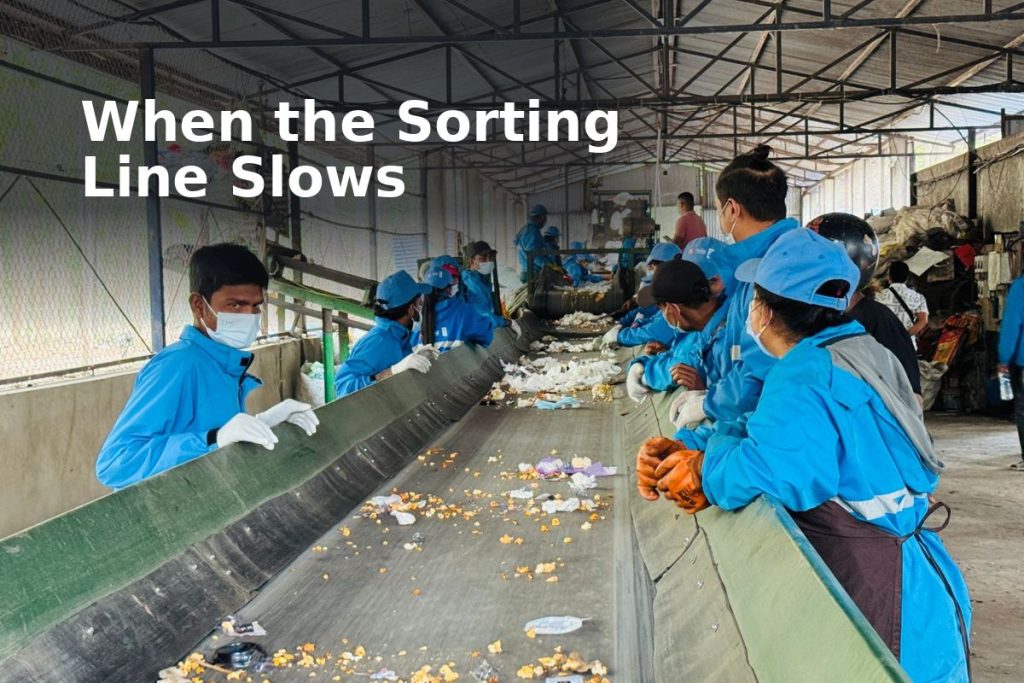
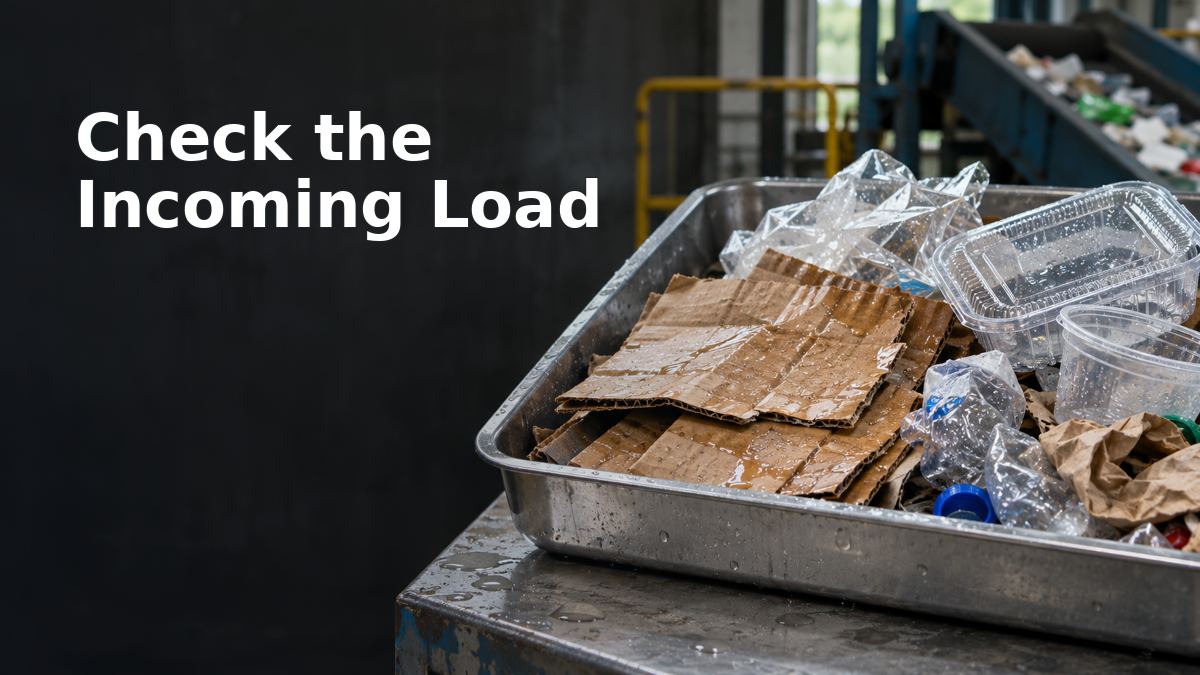
The maintenance technician is on her way to the sorting line when a loader operator calls the shift supervisor. The conveyor has slowed, just as the AI monitor reported. But the loader operator has seen something the alert does not mention: the last delivery contained more wet cardboard than usual. If the supervisor treats the notification as a belt fault, the team could lose time looking for a repair while the same material keeps coming down the line.
That is an illustrative shift at a materials recovery facility, where mixed recyclables are separated into streams that can be sold or processed further. The alert is useful because it tells the crew where and when to look. The next decision depends on what they can verify. Use the alert to locate the problem, then check what changed before acting.

What changed when the line slowed?
A drop in throughput can point to a mechanical problem. It can also follow a change in what the plant is feeding into the line. And if the sensor is unreliable, the reported drop may not match what is happening at all. Those possibilities can produce a similar trace on a screen, but they belong to different people and lead to different actions.
Start by pinning down the observation. Which section slowed? When did it start, and what does the system actually measure there? A count of objects passing a camera is different from a measurement of belt speed. If the camera reports fewer objects while the belt holds its normal speed, it is too soon to say the conveyor is failing. Give the operator the timestamp and the segment rather than handing over a diagnosis.
Then check the material and the machine separately. The supervisor can compare the time of the alert with receiving records and ask the loader operator when the last load entered the feed. A sample taken at the facility’s designated safe sampling point can help confirm the change in material. The maintenance technician can review equipment trends and follow the site’s inspection procedures if there are signs of a fault. If there’s a safety concern, the crew follows its stop and isolation procedures immediately; it does not wait to settle the diagnosis.
Test the explanation before closing the case
Back on the illustrative shift, the team checks the timing. The slowdown starts after the wetter load reaches the sorting line, and the operator reports that the cardboard is arriving in clumps. The crew separates the remaining material from that delivery under the site’s procedures and returns to a known mix. If flow recovers and stays steady, the material explanation gains weight. If the problem persists, maintenance still has an open case. The timing makes the first test worth running; it does not make the case by itself.
That distinction changes who gets the next call. A confirmed equipment fault goes to maintenance. A recurring load problem may belong with receiving or the team that manages the collection contract. A sensor that disagrees with independent observations goes to the people who maintain the measurement system. Sending every throughput alert to maintenance is convenient for the software, but it costs the plant time and hides patterns that another team could address.
Some cases will stay unresolved. A crew might change the feed and service a sensor during the same stop. If the next run looks normal, the team knows the line recovered, but it cannot say which change mattered. Record both actions and leave the cause open. Otherwise the next supervisor inherits a confident diagnosis that nobody actually earned.

Leave the next shift evidence
The shift handover is where this can become routine. Beside the saved alert, keep the segment and time, what the crew observed independently, and what happened after it acted. A note that says “flow returned after changing the feed; mechanical cause not established” will help the next supervisor more than a green status icon. It preserves a clue without turning it into a rule.
The same discipline works at a distribution centre. A drop in picks per hour can reflect scanner trouble, a change in order mix or a shortage at the pick face. Asking the floor lead what changed at the same time is often a better first move than changing the labour plan. The people closest to the work may have seen the change before it showed up in the hourly average.
At your next shift review, pull up a recent alert that sent someone to investigate. Ask the person who took the call what they knew when it arrived, what they had to check, and what evidence let them close the case. Then change that one alert or its escalation instructions so the next crew can get to the same evidence faster. That is a result worth measuring: less time spent chasing the wrong explanation, without skipping the checks that make the right one credible.