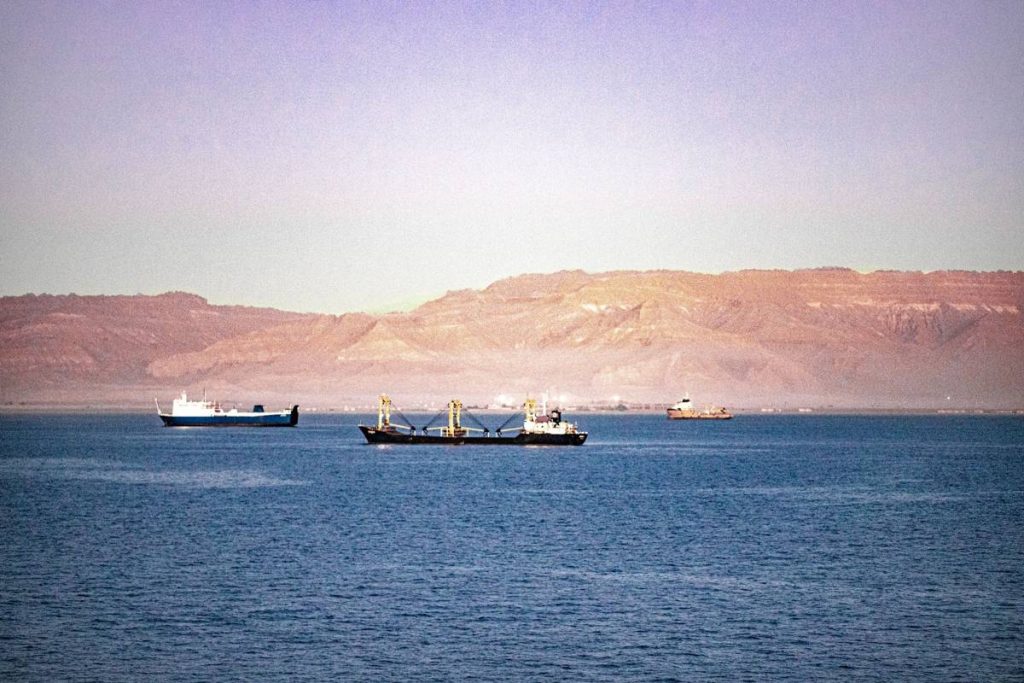
The strangest part of the Red Sea crisis is not that ships are returning to Suez. It is that some are returning while the security risk is still hanging over the route.
The planning rule is simple: treat reopened Suez capacity as reversible, not restored capacity.
What the numbers actually say
Two large carrier partners have announced that four more Asia to Europe services will resume Suez transits on westbound sailings. The change covers one Asia to North Europe string, two Asia to Mediterranean services, and one India to Europe service. They join two Asia to Mediterranean services already using Suez.
The first vessels make the shift concrete. A 15,150 TEU ship is scheduled for an Asia to Mediterranean service. An 18,000 TEU ship is due on an Asia to North Europe string, departing on 19 and 21 September. An 8,650 TEU ship is scheduled for the India to Europe service on 24 September.
Routing data published this month shows that 18 percent of overall westbound Asia to Europe capacity has moved off the Cape of Good Hope and back through the Red Sea and Suez. On the eastbound return to Asia, 38 percent of capacity now uses Suez. Averaged across the month, that means the disruption is about 27 percent normalised, with a wide gap between headhaul and backhaul.
That gap has a practical explanation. Carriers are more willing to normalise the backhaul because they need to reposition empty containers toward export markets facing severe congestion after recent typhoons. Empty equipment availability can justify a route decision even when the security case remains unsettled.
The Cape detour adds thousands of nautical miles and roughly ten days of sailing. It also adds fuel consumption, emissions, and vessel time. Suez can reduce all three, but only if the route remains safe and open.

The route is shorter, the decision is not
The security picture has changed again. A militia group has made rapid military advances in Yemen and controls more of the Red Sea coastline, tightening its position near Bab al Mandab, the gateway to Suez. The group currently says international shipping may pass, with Saudi shipping excluded. That is a fragile permission, not a durable operating condition.
Carriers say they are monitoring the situation closely. They also state that further service changes depend on stability in the Red Sea and no regional escalation. Crew, vessel, and cargo safety remains the stated priority. Those conditions leave planners with a route that is commercially attractive but operationally reversible.
The wider market is sending mixed signals. Drone damage shut a major east to west crude pipeline and hit a Red Sea port. At least two European refiners were told they would not receive October crude allocations. At the same time, transpacific container spot rates have topped $10,000 while Asia to Europe rates are falling. The lanes are moving in opposite directions as energy flows and container flows are redrawn.
The planner’s five minute decision
Picture a network planner reviewing the weekly sailing plan. A carrier notice offers shorter transit times and lower fuel exposure. The commercial team wants the benefit passed to customers. Procurement sees a chance to reduce buffer inventory. The risk manager points to the coastline and asks what happens if attacks resume tomorrow.
That planner cannot solve the security problem. The job is to make the network absorb the decision if conditions change. The old plan was built around the Cape. The new plan points toward Suez. Neither should be treated as permanent while the security posture can change from one day to the next.
The practical shift is from route selection to route control. Keep the Cape option priced, documented, and available. Confirm which bookings can move between services. Check whether inland appointments, customs cutoffs, container availability, and customer promises still work under either transit time. A lower ocean rate means little if the inland plan breaks.
Build the reversible plan this week
Use the reopened services, but put conditions around them. Write down the triggers that would send cargo back toward the Cape. They should be specific enough for a duty manager to act without waiting for a new strategy meeting.
- Security: define the incident, advisory, or route closure that suspends Suez bookings.
- Insurance: set the war risk premium or coverage change that makes the route uneconomic.
- Congestion: set port or inland dwell thresholds that erase the sailing time advantage.
- Fuel: agree on the fuel price or surcharge level that changes the Cape versus Suez calculation.
- Customer service: identify which orders require the safer, more predictable option even at a higher cost.
Then run one scenario with your carriers, forwarders, and key customers. Ask how quickly bookings can be shifted, where empty containers will sit, and which inventory positions need protection. Do this before the next advisory, not after it.
Suez may remain the fastest and most efficient route for many Asia to Europe services. That does not make every reopened sailing a stable network decision. The directors who gain an advantage will be the ones who capture the shorter route while preserving the ability to leave it.