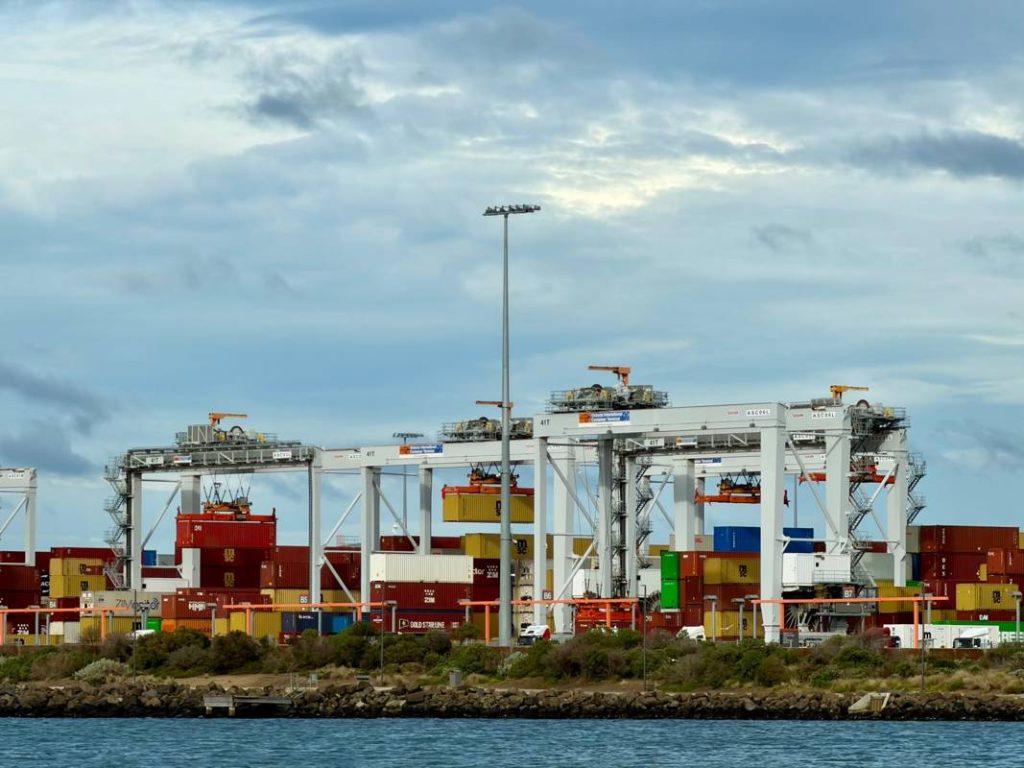
Your team’s morning starts the same way. The control tower shows 187 open exceptions. One of them is the container that missed its vessel, for a customer already inside a service failure window. The other 186 are noise, or at least they can wait. Finding the one that matters takes a planner the better part of two hours, because she has to open every alert, read the context, and judge the impact. Then she has to act on it, which means emails, system entries, and a rebooking that finally lands after lunch.
That gap, between a problem appearing and an action completing, is where supply chains lose money. It is also the gap that agentic AI is built to close.
Visibility was phase one. Execution is phase two. The next generation of supply chain AI does not stop at flagging problems on a screen. It reads the context, prioritizes the exceptions, and carries out the action inside your systems. The dashboards that took a decade to build are becoming the rear-view mirror, while the driving itself moves to software.
Think about what watching actually costs. Alerts scream with equal volume about everything, so the human brain does what it always does: it pattern-matches, guesses, and prioritizes by recency rather than impact. An agent does the opposite. It weighs every exception against committed dates, customer promises, and cost, then surfaces the single rebooking that matters. Exception prioritization is the quiet superpower of agentic AI. It does not replace judgment. It spends judgment where it pays.
The work lands in the places that burn the most hours. In procurement, agents watch rate movements and supplier signals, then initiate sourcing actions within approved parameters. In freight forwarding, they track shipments against committed ETAs and execute rebookings before a delay becomes a customer event. In customs, they triage holds and missing documents against the rulebook, resolving routine cases end to end and escalating only the genuinely novel ones.
The shift is showing up in results, not just demos. CH Robinson, one of the largest freight forwarders in the world, says its AI investments are already paying dividends at a time when much of the industry is focused on cost discipline and resilience. When a company of that scale reports returns from deployed AI rather than from a pilot deck, the execution era has arrived.
Just as important is who gets to play. For years, digitizing a supply chain meant consolidating ERP systems, migrating data for two years, and funding consultants. Most mid-market companies simply could not. Agents change the math. They sit on top of the messy systems you already have, reading emails, PDFs, EDI, and spreadsheets, and they act through the interfaces that exist today. The integration layer becomes the agent itself, which means a company can leapfrog years of technical debt instead of financing it.
None of this requires handing over the keys on day one. The workable model is bounded autonomy, and it is a ladder. Start with agents that only read and triage. Then let them recommend, with a human approving. Then authorize execution inside pre-defined parameters: spend limits, lane rules, exception thresholds. Escalate the novel cases, execute the known ones. The companies succeeding with agents are the ones climbing this ladder deliberately, not the ones chasing full autonomy in a single quarter.
Consider the planner from the opening. Her job today is triage. She spends three hours every morning deciding which alerts matter before she can make her first real decision. The agent does not take her job. It takes the triage. She keeps the judgment: the difficult rebooking, the difficult customer call, the novel disruption no playbook covers. Same title, better work.
Here is how this plays out at a mid-sized forwarder. No SAP-scale transformation, no data lake project. They picked their most painful exception queue, the one that burned the morning of every operations person. They taught an agent to triage it, then to execute the eighty percent of cases that follow known patterns, inside rules the team defined. Within a quarter, the queue that consumed two hours a day took fifteen minutes. The team stopped watching screens and started calling suppliers, fixing root causes, and handling the exceptions that genuinely needed a human. The transformation was not technological. It was a change in what the team’s attention was spent on.
Two honest caveats. Data quality is still the ceiling: an agent is only as good as the signals it reads, so fix the data that matters rather than all of it. And trust is earned in production, which is exactly why the ladder exists. Start read-only, prove value, then expand authority.
So the question for supply chain leaders is no longer whether to adopt AI. It is what your agents should be authorized to do by the end of next quarter. Pick the exception queue that hurts most. Measure the time from event to action, and watch it collapse. The dashboards stay, but they become the rear-view mirror. The agents are taking the wheel, and the operators who let them drive are already pulling ahead.