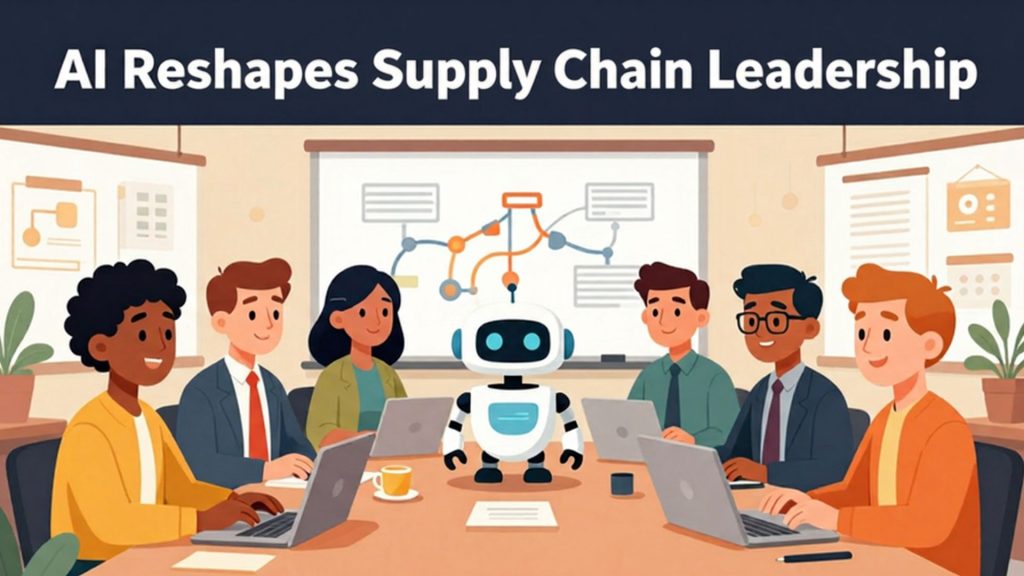
When a company’s board of directors starts asking about artificial intelligence, something fundamental has shifted. Five years ago, boardroom conversations revolved around earnings, market share, and regulatory compliance. Today, a growing number of pioneering boards are formalising AI oversight committees, mandating AI-readiness assessments, and tying executive compensation to digital transformation milestones. For supply chain leaders, this shift is not abstract. It lands directly on their desks.
The question is no longer whether AI belongs in supply chain operations. It is whether your data, your models, and your strategy are ready for the scrutiny that is coming.
The Boardroom Signal
The trend is visible across industries. In early 2025, a Fortune 50 consumer goods company established a board-level AI committee with a specific mandate: evaluate AI adoption across all business functions and report back within two quarters. The supply chain division received the first site visit. Not marketing. Not finance. The warehouse.
This sequence is not accidental. Boards recognise that supply chain is where AI delivers the most tangible, measurable impact. Inventory optimisation alone can reduce working capital by 15 to 25 percent. Demand sensing powered by machine learning cuts forecast error by 30 to 50 percent. Route optimisation saves millions in fuel and labour. These are not speculative benefits. They are documented outcomes from early adopters.
What has changed is the governance layer. When a board formalises AI oversight, the supply chain function moves from experimental projects to enterprise-wide mandates. A pilot here and there is no longer sufficient. The board wants a roadmap, a timeline, and a set of KPIs that track AI deployment across procurement, logistics, planning, and customer fulfilment.
The Data Prerequisite
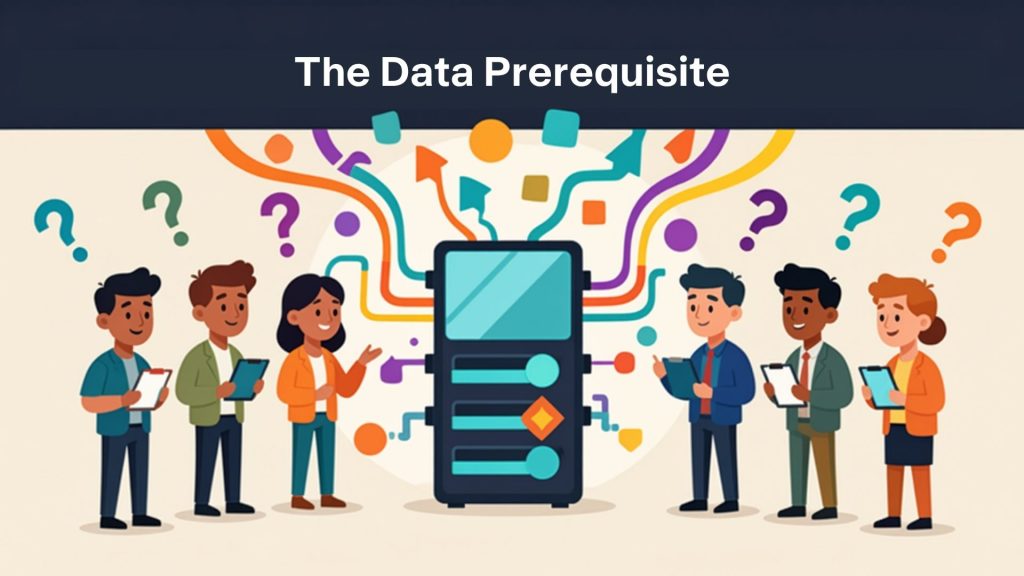
Every board-level AI conversation eventually arrives at the same question: do we have the data to support this?
For supply chain organisations, this is the moment of truth. AI models are only as good as the data they consume. If your demand forecasts still live in spreadsheets, if supplier performance data is scattered across three different ERP modules, if transportation costs are tracked manually on a monthly basis, the board will hear about the gaps before you have time to explain them.
The practical implication is straightforward. Supply chain leaders need to conduct a data readiness audit before the board asks for one. This means documenting data sources, assessing data quality, identifying integration gaps, and establishing a data governance framework. It means knowing which data sets are clean enough for machine learning and which require remediation.
The companies that pass this test have one thing in common: they started early. They did not wait for the board to demand AI readiness. They treated data infrastructure as a strategic asset, not an IT project.
The Model Strategy
Once the data question is addressed, the next board-level question is about model strategy. Are you building proprietary models, adopting off-the-shelf solutions, or using a hybrid approach? What is the timeline from proof of concept to production? How do you measure model performance, and how often do you retrain?
These questions expose a common weakness in supply chain AI initiatives: the gap between pilot and scale. Many organisations can point to a successful pilot in one warehouse or one product category. Far fewer can demonstrate AI deployment across their entire network. Boards are increasingly sophisticated about this distinction. They want to see a scaling plan, not a collection of experiments.
The most effective supply chain organisations are adopting a layered model strategy. At the foundation, they deploy proven models for high-volume, low-complexity decisions. Things like demand forecasting, inventory replenishment, and basic route optimisation. These models are well understood, widely available, and relatively easy to implement.
At the next layer, they deploy more sophisticated models for complex decisions. Supplier risk assessment, network design optimisation, and dynamic pricing fall into this category. These models require better data and more specialised talent, but they also deliver higher returns.
At the top layer, they are experimenting with emerging capabilities like agentic AI for autonomous decision-making. This is where a model can not only recommend an action but execute it within defined parameters. This layer is still early, but boards are taking notice.
The Organisational Implications
Board-level AI adoption also changes the talent conversation. When AI becomes a governance priority, the supply chain function needs people who can bridge two worlds: deep domain expertise in supply chain operations and enough technical fluency to evaluate model outputs critically.
This is a scarce combination. Many organisations are addressing it by creating new roles: supply chain data scientists, AI product managers for logistics, and digital supply chain officers who report directly to the COO. The traditional separation between IT and supply chain is dissolving.
The organisational shift extends to how decisions are made. When a board expects AI-driven insights, the supply chain function must be comfortable with model-based decision-making. This does not mean humans are removed from the loop. It means the default question shifts from “what do we think?” to “what does the data say?”
For supply chain leaders who have spent decades building relationships, intuition, and experience-based judgement, this is a significant cultural change. The leaders who navigate it successfully are not the ones who resist the shift. They are the ones who learn to combine data-driven insights with human judgement, using each where it adds the most value.
What This Means for Your Organisation
If your board has not yet asked about AI in supply chain, it will. The timeline is measured in months, not years. The question will come, and when it does, the quality of your answer will determine the resources, autonomy, and trust you receive.
Start with a data readiness assessment. Know where your data lives, how clean it is, and what gaps exist. Build a model strategy that moves from proven applications to more ambitious ones, with clear milestones and measurable outcomes. Invest in talent that can bridge supply chain expertise and technical fluency.
The boardroom has discovered AI. The supply chain function needs to be ready for the conversation.