Every time a tech giant announces mass layoffs, the story is framed as a human resources story. Jobs lost. Careers disrupted. Communities affected. All true. But there is another story that runs beneath the surface, one that supply chain professionals need to understand because it reshapes the landscape they operate in.
When Oracle cut 21,000 jobs in a single restructuring, the stated reason was reallocation of resources toward AI infrastructure. This is not a cost cutting move. It is a strategic reallocation of capital from human labor to machine infrastructure at a scale that has no modern precedent. And the supply chain implications ripple far beyond Oracle’s campus.
The Infrastructure Supply Chain Behind AI
AI does not run on code alone. It runs on data centers, server racks, networking equipment, cooling systems, and electrical power. Every dollar that Oracle redirects from salaries to AI infrastructure flows through a physical supply chain. Those dollars buy graphics processing units from NVIDIA, server memory from Samsung, networking gear from Cisco, and cooling equipment from Vertiv. They consume electricity from utilities and water for cooling systems. They require construction materials for data center facilities and specialized labor for installation and maintenance.
The scale is staggering. Oracle’s job cuts represent roughly $2 to $3 billion in annual salary expenses redirected toward capital investment. In supply chain terms, this is a demand shock of the first order. The companies that supply data center infrastructure are seeing order books that stretch years into the future. The companies that supply the equipment those data centers need are scrambling to expand capacity. And the companies that supply the raw materials for that equipment are facing shortages they have never seen before.
When Demand Outstrips Supply at Every Tier
The AI infrastructure boom has created a cascade of supply constraints that propagate through multiple tiers of the supply chain. At tier one, NVIDIA cannot make enough advanced GPUs to meet demand. At tier two, TSMC cannot make enough advanced packaging capacity to supply NVIDIA. At tier three, ASML cannot make enough lithography equipment to supply TSMC. At tier four, the specialty chemical and materials suppliers cannot keep up with ASML’s demand.
Each tier has its own lead times, its own capacity constraints, and its own set of competing customers. The result is a supply chain that is simultaneously booming and bottlenecked. Demand is growing faster than any tier can expand. The bottlenecks shift from one tier to another as investments are made, but they never disappear. They just move.
For supply chain professionals, this creates a fundamentally different planning environment. Normal demand planning assumes that supply will eventually catch up. In the AI infrastructure market, there is no evidence that supply will ever catch up. The technology is advancing too fast. Each generation of chips requires more advanced manufacturing equipment, which takes longer to build and costs more to develop. The bottlenecks are structural, not cyclical.
The Procurement Implications
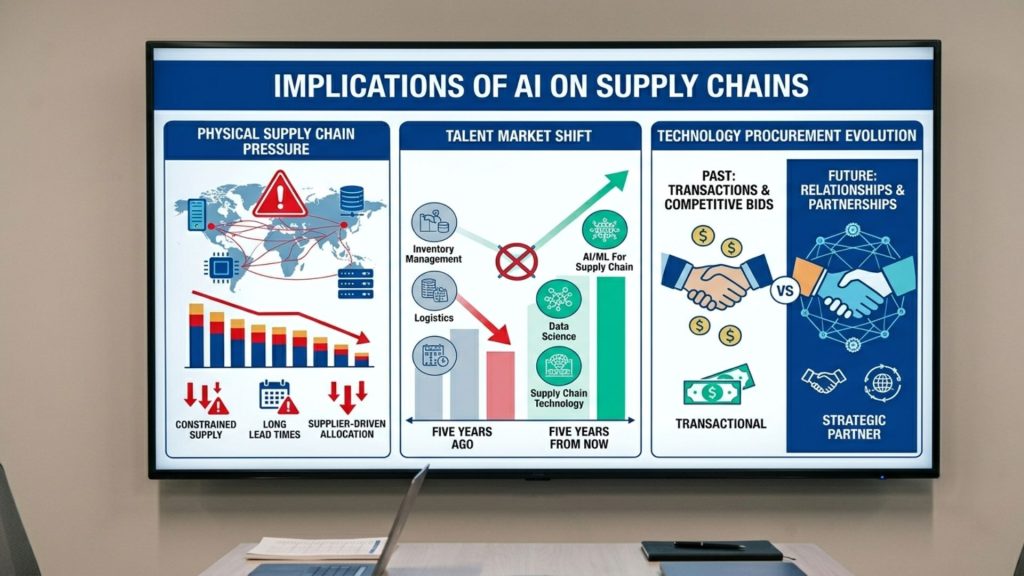
For companies that need AI infrastructure, the procurement strategy has changed fundamentally. It is no longer a question of price or features. It is a question of allocation. NVIDIA does not sell GPUs to whoever pays the highest price. It allocates them to customers based on strategic importance, long-term relationships, and total ecosystem value.
This is a paradigm shift for procurement professionals who are used to competitive bidding and market pricing. In the AI infrastructure market, the supplier chooses the customer, not the other way around. Companies that want guaranteed access to next generation hardware must invest in relationships, not just purchase orders. They must demonstrate commitment through multi-year agreements, engineering partnerships, and joint development programs. The transactional relationship of traditional procurement is being replaced by a relational model that looks more like a strategic alliance than a vendor contract.
The Talent Supply Chain
The Oracle layoffs highlight another supply chain dimension that is often overlooked: the talent supply chain. Thousands of experienced technology professionals are entering the job market simultaneously. Many of them have skills in enterprise software, cloud infrastructure, and database management that are directly relevant to supply chain technology.
For companies that have been struggling to hire supply chain technology talent, this creates an unusual opportunity. Experienced Oracle professionals who might not have considered supply chain roles before are now open to opportunities outside the traditional tech sector. The supply chain organizations that move quickly to attract this talent will gain a long-term competitive advantage.
But the talent supply chain works both ways. The same AI infrastructure boom that created the Oracle layoffs is also creating unprecedented demand for AI specialists, data scientists, and machine learning engineers. Supply chain organizations that want to hire AI talent are competing with every technology company in the world. The talent that supply chain needs most is the talent that is hardest to attract, because the skills are in demand everywhere and the supply is limited.
The Structural Shift
The Oracle layoffs are not an isolated event. They are a signal of a structural shift in how technology companies allocate resources. The era of hiring thousands of enterprise software engineers to maintain and improve legacy systems is ending. The era of investing billions in AI infrastructure is beginning.
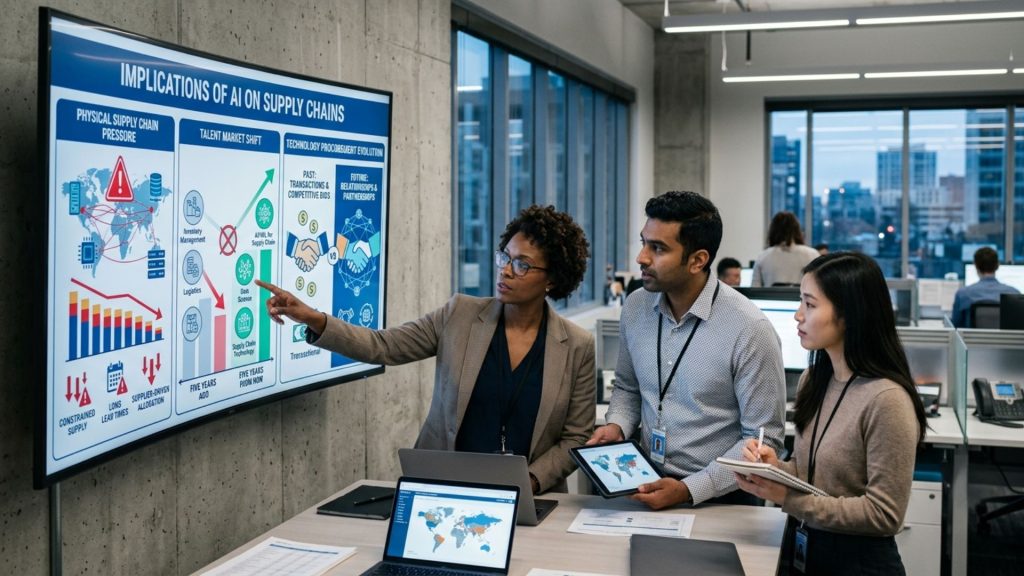
For supply chain professionals, this shift has three implications. First, the physical supply chain for AI infrastructure will remain under pressure for the foreseeable future. Plan for constrained supply, long lead times, and supplier driven allocation. Second, the talent market for supply chain technology roles is changing rapidly. The skills that were valuable five years ago may not be valuable five years from now. Third, the way technology is procured is changing. Relationships matter more than transactions, and strategic partnerships matter more than competitive bids.
The Oracle story is not about layoffs. It is about reallocation. And the supply chain implications of that reallocation will be felt for years to come.