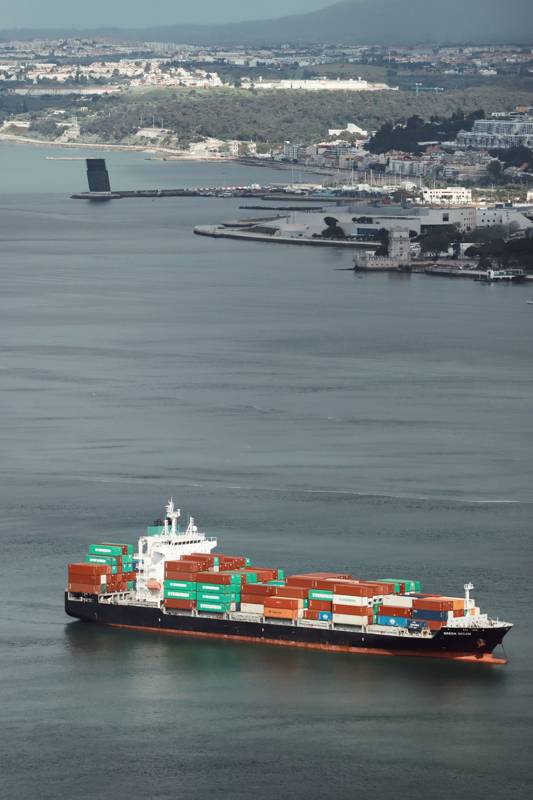
A year ago, SeaLead was the world’s 13th largest container line. It operated 53 ships, moved more than 200,000 TEU of capacity, and was one of the fastest-growing carriers in the industry. This month, it filed for voluntary liquidation.
No collision sank it. No cyberattack. No market crash. A sanctions list did.
On July 14, 2026, the US Treasury’s Office of Foreign Assets Control directly designated Sea Lead Shipping Pte Ltd, together with subsidiaries in Dubai, the Marshall Islands and India, as part of a major action against the shipping and trading network of Mohammad Hossein Shamkhani. Three SeaLead containerships, the Paya Lebar, the Shenton Way and the Tanjong Pagar 1, were blocked at the same time.
The lesson for every shipper, forwarder and importer is simple: your supply chain is only as safe as the most opaque link in it.
The visible part of the iceberg
What shippers saw was attractive: aggressive rates, growing services, a modern fleet. SeaLead was founded only in 2017, and it scaled fast enough to become a familiar name on Middle East and intra-Asia trades. On paper, it was the kind of carrier that wins RFQs.
But the first crack appeared more than a year ago. In July 2025, 16 ships SeaLead had chartered were blacklisted over alleged links to the Shamkhani network. The company terminated those charters immediately and denied any connection to the Iranian regime. It insisted it ran stringent sanctions-screening and due-diligence procedures. For a while, that denial held. Charterers kept booking. Shippers kept loading.
Then the pressure compounded. In March 2026, the US Department of Justice filed a civil forfeiture complaint seeking $2.4 million allegedly intended for SeaLead and its Indian affiliate. By late July, the fleet had collapsed from 53 vessels to just four. The carrier’s global ranking had fallen from 13th to 80th. On the last day of July, the company moved into voluntary liquidation.
Why sanctions are so fast
Sanctions rarely need to seize anything. They work by cutting off the ecosystem a company depends on. A designated carrier cannot collect freight through the banking system. Insurers pull cover. Ports refuse calls. Charterers walk away from vessels. Crew payments become impossible. The business does not explode; it suffocates, and the timeline from designation to liquidation can be measured in weeks.
That speed is what makes this case a warning for everyone moving cargo, not just for the carrier’s own customers. OFAC issued General License Z to allow a limited wind-down for SeaLead and the three blocked ships until September 12. The license permits cargo discharge, crewing, bunkering, insurance and safe port calls, but it expressly prohibits new commercial contracts. Translation: if your container is on a blocked vessel, your cargo is not moving until a special permit or a different ship rescues it. A consignment can sit for months while lawyers argue.
The hidden part of the iceberg
SeaLead’s documents were clean. Its screening was, by its own account, rigorous. None of that mattered, because the designation was not about the carrier’s paperwork. It was about who ultimately controlled and benefited from the network the carrier belonged to. Treasury alleged SeaLead was a key container shipping business within Shamkhani’s network, moving both legitimate and illicit cargo, including shipments connected to Iran-backed Houthi interests in Yemen.
Here is the uncomfortable part: a forwarder checking SeaLead’s name against the sanctions list would have found nothing before July 14. The blacklisting hit the network first, through chartered vessels and related entities, before it ever touched the company’s own name. The counterparty risk was not in the contract. It was in the ownership chain, the charter structure and the beneficial owners behind the logo.
What to do about it
First, screen beyond the name. Check who actually owns and controls your carrier, including beneficial ownership, flag states and the charterers of the specific vessel carrying your cargo, not just the brand on the booking confirmation.
Second, monitor continuously. Sanctions designations land without warning. A monthly compliance check is not compliance; the OFAC SDN list changes weekly, and the gap between designation and your next review can be the gap that strands a shipment.
Third, put sanctions events in your contracts. Add clauses that define designation or blocked-vessel events as triggers for rerouting, cost allocation and liability, instead of discovering after the fact that your force majeure clause does not cover a sanctions wind-down.
Fourth, plan for cargo recovery. Know what a General License looks like, who applies for it, and how your cargo would be discharged and reforwarded if the ship under it is blocked. Hope is not a recovery plan.
SeaLead’s collapse took twelve months from first blacklist to liquidation, and the fleet went from 53 ships to 4 in the final stretch. The rate you pay and the transit time you are promised are the visible part of the carrier. The ownership, the network and the counterparties behind it are the iceberg below the waterline. Every shipper who did not look below it just learned what that costs.