
A rival could buy the same glasses tomorrow and still miss the correct entrance. The valuable asset may be the operational knowledge returned to the next delivery, not the frame on a driver’s face.
Amazon describes delivery glasses that place navigation, package details and customer instructions in a driver’s field of view. They can help confirm the right packages, display gate or access instructions and preferred dropoff locations while walking, and capture proof of delivery hands-free. That is useful equipment. It also points to a larger possibility: a recurring exception could improve the next attempt, if the surrounding system learns carefully.

What the glasses do today
The described capabilities are practical and bounded. Amazon says the cameras take still images only, with no video or audio captured. Faces and license plates are detected and blurred, images are encrypted, access is restricted, and images are automatically deleted after a short retention period. There are no images while a driver is driving between stops. Wearing the device is optional, and a dedicated camera privacy switch is available.
Those boundaries matter because the device changes what a worker sees and what can be recorded at a doorstep. The features are described by the company, not independently measured, and do not establish fleetwide productivity or safety outcomes. The glasses should not be presented as proven to make deliveries faster or safer.
Amazon has also described future possibilities, including wrong door defect detection in later versions. That is not the same as a deployed system that autonomously identifies hazards or proves an address is wrong. The distinction leaves room to assess a possible tool without calling it a proven moat.
Where a learning loop could matter
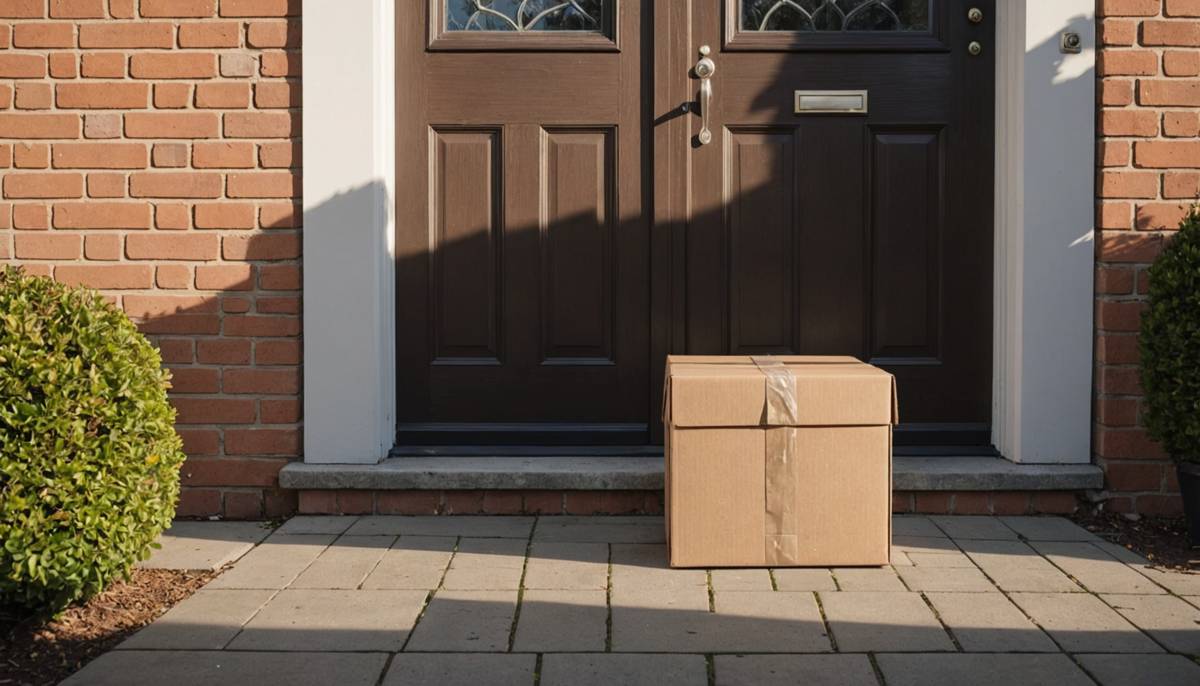
Imagine a driver reaching the wrong entrance of an apartment building because an access note is stale. The driver finds the service entrance and completes the delivery. In a well designed process, the result could support a proposed correction, such as telling the next driver to try the service entrance first. This remains a hypothetical workflow, not a reported delivery or a claim about Amazon’s current system.
The potential advantage would come from useful knowledge returned at the moment of need. A competitor can buy cameras, displays and navigation software. It cannot instantly reproduce the accumulated understanding of which entrance works at a particular building, when a gate code changed, or which preferred dropoff actually leads to a completed delivery.
That conclusion is conditional. Amazon does not disclose a full learning or retention architecture, and it does not follow that every observed detail is stored, used for training, or shared across drivers. The possible operational knowledge is analysis, not proof that raw doorstep photos are kept indefinitely. A responsible design might retain a validated instruction or abstract outcome while deleting the image that helped establish it.
Governance would be part of the operating design. A proposed process could assign an operations owner to review a correction against the delivery outcome, record when it was validated, and set an expiry date for old instructions. That is a governance choice, not an Amazon internal fact. An instruction could remain a suggestion until checked, then be revisited when access permissions or building layouts change.
Coverage matters as much as volume. Knowledge about frequently visited buildings may be more useful than thin observations from rarely visited addresses. The system should compare delivery outcomes with guidance, make uncertainty visible, and let a driver challenge a location label. If a correction fails repeatedly, the record should become easier to review rather than gain authority through repetition.
Driver trust belongs in the design from the start. A worker should not inherit a previous driver’s confusion or feel pressured to accept tracking as the price of doing the job. Drivers need a way to correct an instruction, understand retention, and appeal an inaccurate operational record. Customers also need the stated privacy boundaries to remain meaningful at the doorstep.

What competition and testing would show
This kind of advantage would be difficult to keep forever. Competitors could build comparable feedback loops, carriers could share useful local networks, and property managers could maintain accurate access information themselves. Scale may accelerate learning, but it can also spread a bad instruction widely when validation is weak. Local knowledge is valuable precisely because it must keep pace with local change.
The decisive test is whether a doorstep exception becomes reliable operational knowledge for the next visit without creating unacceptable surveillance or stale automation. The correction must survive review, remain contestable, and reach the next driver without exposing information that the task does not require.
A sensible pilot would start with one recurring exception, such as a service entrance that delivery workers repeatedly miss. It could test whether the next driver receives corrected guidance, while measuring repeat failures, time spent resolving the exception and delivery outcomes. The review should also include driver burden, correction rates, appeal outcomes and privacy concerns. Those measures would show whether the loop improves work rather than merely producing more records.
If guidance stays accurate through changing permissions and different drivers, the case for an operational data advantage becomes stronger, though it still would not prove a durable moat. If a correction helps only once, expires too slowly, or increases pressure on workers, the hardware has not created the advantage imagined. The practical value lies in a careful cycle of correction, validation, limited retention and useful delivery guidance.