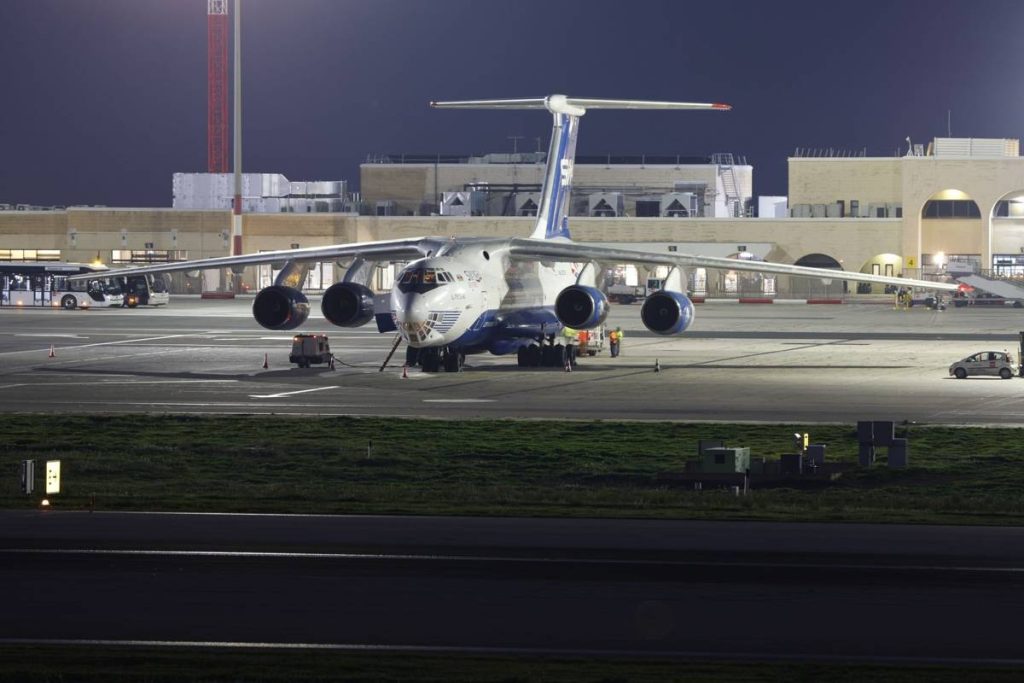
At Leipzig/Halle Airport, the drone was not supposed to be there. It was found on the runway area, carrying explosives, at one of Europe’s busiest cargo airports. This is not a battlefield. This is the heart of DHL’s European network, the hub where freight lands, gets sorted and leaves again every night. The question nobody in air freight wants to answer is simple: if an armed drone can reach this tarmac, which hub is safe?
Your cargo hub is no longer just an asset. It is a target, and the weapons are cheaper than the forklifts inside the building.
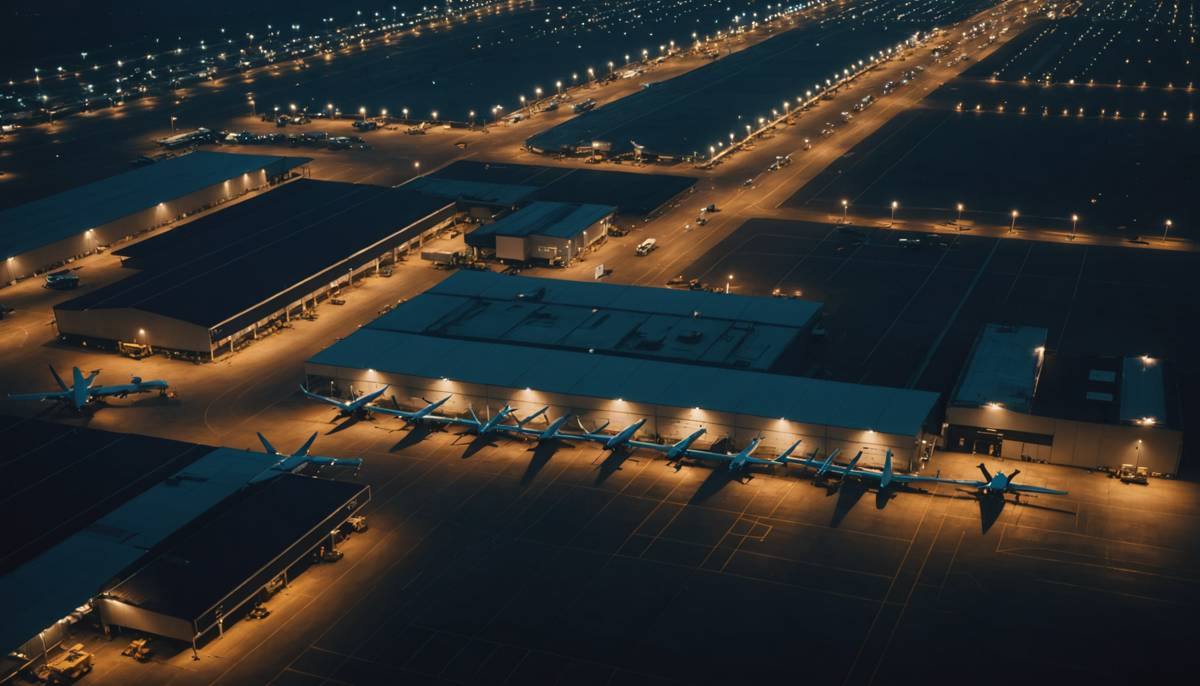
Leipzig/Halle is not an ordinary airport. DHL operates its largest global air hub there, and the numbers explain why it matters: hundreds of flights a week, tens of thousands of parcels sorted every hour, and roughly 85 percent of the airport’s cargo volume tied to a single logistics company. When a facility concentrates that much value in one place, it concentrates risk in exactly the same place. The security team that guards the gates was built for a world where the threat arrives in a truck. It now has to plan for a threat that arrives in the sky.
The drone incident is not a first. In the summer of 2024, incendiary devices hidden inside parcels ignited at DHL facilities in Leipzig and in Birmingham, UK. Investigators traced the trail back to a sabotage campaign widely attributed to Russian intelligence, an operation designed to seed fires on cargo aircraft headed for North America. The industry’s response was better parcel screening. The adversary simply moved the attack from inside the parcel to the airspace above the hub. That escalation is the real story: every countermeasure pushed the attack one step further out, from package to facility to runway. A drone with explosives does not need to destroy a sorting hall. It only needs to ground a hub for one night, and a grounded hub costs more than the drone that grounded it.
Rerouting will not save air freight the way it saved ocean shipping. Since the Red Sea crisis began, container vessels have diverted around the Cape of Good Hope, and new transhipment niches have emerged across the Middle East, with Gulf ports absorbing traffic that once passed through Suez. Rerouting works on water because there is always another route. Air hubs have no alternative geography. There is no Cape of Good Hope for Leipzig.
Leipzig is one node in a much larger pattern. In the past two years, undersea cables have been damaged in the Baltic, GPS jamming has disrupted shipping near conflict zones, and ports have been blockaded by actors with no navy at all. Supply chains are being studied, mapped and attacked by states and by groups that are not states. As the analysis around Leipzig makes clear, logistics wins wars, and adversaries now know it. The drone on the runway is the same logic applied to air freight.
Think about what one grounded night costs. Aircraft queued on the apron, cargo stranded in the wrong country, customers paying air freight rates because they cannot afford a week of delay. The financial damage of a single disrupted night is measured in the millions, and the drone that caused it can be bought with pocket money. Asymmetric threats are asymmetric precisely because the defender pays for the outcome while the attacker pays only for the weapon.
Think about the night shift supervisor at any major cargo hub. Her job was always about throughput: planes on time, parcels moving, paperwork clear. Now a new question sits on her desk. She was trained to check trucks and identity cards, but nobody trained her for drones on final approach. The threat model changed faster than the security manual, and the people on the ground were the last to be told.
Watch the timeline of one hub and the pattern is unmistakable. In 2024, a parcel catches fire in a sorting facility, and the industry tightens parcel screening. In 2026, an armed drone appears on the runway, and the industry is asked to defend airspace it never controlled. Between those two moments, the attacker learned the map. Every hub has a website, a published flight schedule and a well-documented network of suppliers. The intelligence work was never secret; it is public.
The lesson for every logistics executive is uncomfortable but simple: treat your hub as a military installation, not a throughput machine. That means airspace awareness around facilities, drone detection and response plans, physical security reviews that cover the perimeter and the approach corridors, and security teams that sit in the same room as the planners. The question is not whether your hub is a target. It is when, and the answer already landed on a runway in Leipzig.