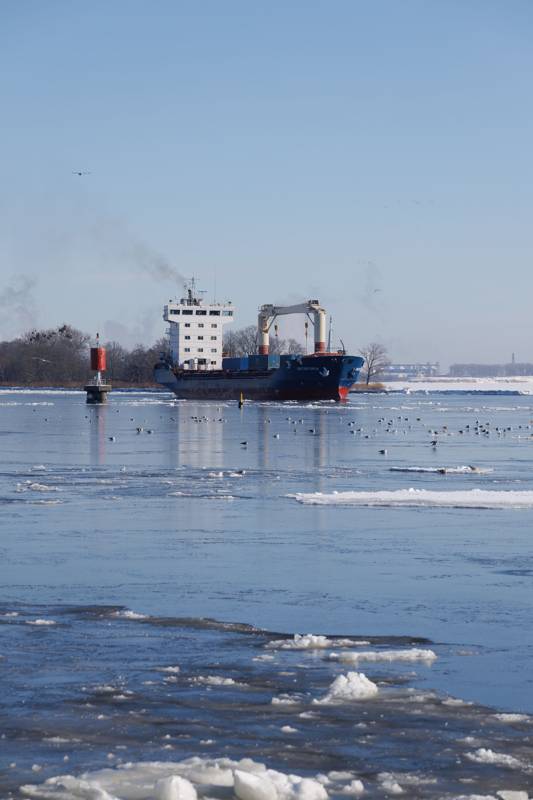
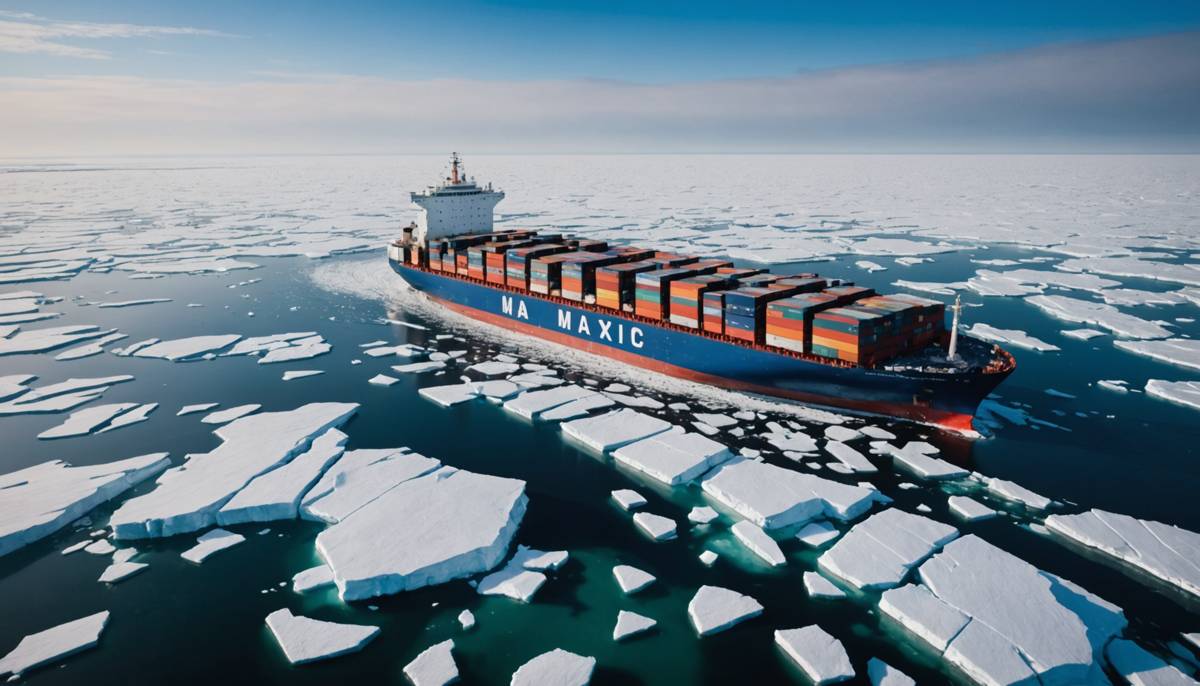
A container ship is now sailing regularly between China and Europe through the Arctic. Not as an experiment, not as a one off stunt, but as a scheduled cargo service. The route that was once a footnote in shipping history has become a commercial lane.
Sea Legend, a Chinese shipper, has launched the world’s first regular cargo service through the Northern Sea Route. Its vessel, the Dubai Tower, runs between Ningbo and the British port of Felixstowe, following Russia’s northern coast through the Arctic Circle. The service does not just shorten the journey. It cuts the China to Europe sailing time by more than half, and it arrives at a moment when every alternative route has become more expensive or more dangerous.
The Dubai Tower is no tramp freighter testing the ice. With capacity for 1,740 twenty-foot containers, it is the largest commercial ship to transit the Arctic since Maersk sent a vessel through in 2018. Eight years ago that voyage was a headline. Today it is a schedule.
The math is what makes the route compelling. The Northern Sea Route spans roughly 3,500 miles, a fraction of the distance around Africa’s Cape of Good Hope or through the Suez Canal. Less distance means less fuel, lower emissions, and shorter capital cycles for cargo owners. Sea Legend claims the route could halve emissions and deliver significant fuel savings, an argument that grows stronger every time the Red Sea closes or canal tolls rise.
None of this would be possible without a slow, structural shift in the Arctic itself. The route has traditionally been navigable only during a short summer window, when sea ice retreated enough to let ships pass. That window has widened steadily as ocean temperatures have warmed. Summer sea ice coverage in the Arctic has fallen by roughly a third since 1979, turning a corridor that was once a gamble into a seasonal certainty. A shipper can now plan a summer schedule on the NSR with confidence that would have been unthinkable a decade ago.
Consider what this means for a mid sized manufacturer shipping goods from Ningbo to Rotterdam. Today the planner chooses between the Suez Canal, with its tolls and its vulnerability to regional instability, or the Cape route, which adds weeks to the journey. The Arctic option changes the trade off. A shorter sailing time lets the manufacturer carry less safety stock, respond faster to European demand, and price products with tighter margins. The freight lane itself becomes a competitive advantage rather than a fixed cost.
The risks are real, and they deserve honesty. A fuel spill along the Northern Sea Route would be dramatically harder to clean up than a spill in open water. Oil decomposes slowly in freezing temperatures, and once it becomes trapped in ice, removal is nearly impossible. The same warming that opens the route also makes its hazards less predictable. Operators betting on the NSR are accepting an environmental balance sheet that no one has fully priced.
There is also a geopolitical dimension that no carrier can ignore. The route hugs Russia’s northern coastline, which means access, icebreaking support, and regulatory permission all flow through Moscow. A trade lane that depends on a single country’s goodwill is a lane with a strategic choke point built in. Shippers who remember how quickly the Red Sea closed, or how fast sanctions can redraw shipping maps, will keep the Arctic option in their plans but will not put all their cargo in one frozen basket.
The bigger picture is that trade routes are not permanent geography. They are decisions. The Suez Canal was built, the Cape route was chosen, and now the Arctic is being added to the list of viable lanes because the conditions changed and someone decided to build a schedule around them. The companies that treat the current map of world trade as fixed will wake up one day to find their competitors have shaved two weeks off every Europe bound shipment.
The Arctic shipping era is beginning. It will not replace Suez or the Cape overnight, and it may never carry the majority of Asia Europe volumes. But the first regular service is running, the largest ship yet has made the transit, and every summer the window gets a little wider. For supply chain planners, the question is no longer whether the Arctic route will exist. It is whether their network is ready for a lane that cuts transit time in half. The map is being redrawn, and the planners who redraw their own routes first will be the ones who benefit.