When a Canadian logistics director wakes up to find that 25 percent of his trucking fleet is suddenly stuck at the Ambassador Bridge because of a retaliatory tariff hold, he does not have time to check the news. He barely has time to check the chassis pool. But that morning’s chaos is not an isolated incident. It is one corner of a global storm that is hitting supply chains from four directions at once.
Welcome to the multifront disruption of 2026. And no, the old playbook will not save you.
Front One: The US-Canada Tariff War Comes Home
The numbers are stark. When the United States imposed a 25 percent tariff on Canadian goods and Canada responded in kind, the immediate impact was not on trade volume. It was on capacity. At the Detroit-Windsor corridor alone, processing times for commercial vehicles spiked by over 300 percent during the first week. Trucks carrying automotive parts, medical supplies, and food sat in queues that stretched for miles. The just-in-time model, already fragile after years of pandemic whiplash, effectively broke at the border.
The lesson here is not about trade policy. It is about concentration risk. When a single corridor handles more than a quarter of two nations’ bilateral trade, any friction there radiates outward. Warehouses in Michigan and Ontario filled up within 48 hours. Spot rates on alternative routes tripled. And none of this was priced into contracts signed six months earlier.
Front Two: The Red Sea Is No Longer Navigable by Insurance Alone
Meanwhile, in the Red Sea, the Houthi campaign against commercial shipping has entered a new and more dangerous phase. It is no longer a matter of random missile strikes. The threats are now so persistent that major carriers have abandoned the Suez route entirely for all but the most essential cargo. The cost of insuring a single transit through the Bab el-Mandeb strait has risen by more than 800 percent year over year. For many operators, it is simply not worth the risk.
The rerouting around the Cape of Good Hope adds roughly 10 days to each voyage, consuming fuel, crew hours, and vessel availability at a time when the global container fleet is already stretched thin. And here is the overlooked factor: those extra days cascade. A vessel that arrives two weeks late in Rotterdam does not just miss its slot. It misses the next three slots, because the schedule was built on tight turnaround assumptions that no longer hold.
Front Three: Hormuz Crews Are Running on Empty
If the Red Sea is a slow burn, the Strait of Hormuz is a ticking bomb. The latest twist is not a blockade or a seizure. It is a manpower crisis. After months of heightened tensions, crew change operations in the Gulf have become unpredictable. Sailors are extending tours beyond legal limits. Fatigue-related incidents are rising. And when a tanker crew in the Strait is too exhausted to respond to a near-miss, the consequences could be catastrophic.
Industry estimates suggest that over 15 percent of the global tanker fleet is now operating with crew who have been onboard for more than 12 months straight. That is a safety violation in normal times. In a chokepoint where 20 percent of the world’s oil passes, it is a recipe for a major incident. And the supply chain shock of a Hormuz closure, even a temporary one, would dwarf anything seen since the 1970s.
Front Four: The Black Sea Missile That Changed the Insurance Math
The fourth front opened without warning. A missile strike on a civilian cargo vessel in the Black Sea near Odesa did not just sink a ship. It sank the remaining confidence that war risk insurers had in the region. Within hours, premiums for Black Sea transits quadrupled. Several major lines suspended service indefinitely. Grain exports, already a sensitive geopolitical lever, stalled again.
For supply chain professionals, the Black Sea is a bellwether. If a region that was stabilizing can revert to active conflict in a single afternoon, then no route is truly safe. The assumption that war risk is geographically contained has been proven false. The battlefield is now the trade lane.
The Convergence Problem: Why Resilience Alone Is Not Enough
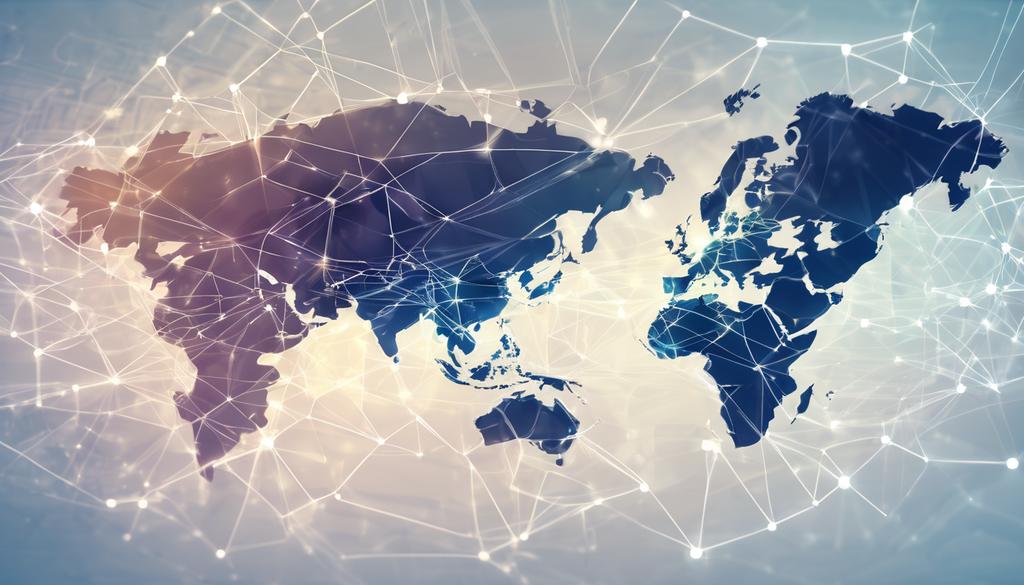
Each of these disruptions, taken individually, is manageable. A tariff dispute can be hedged. A Red Sea reroute can be planned. A crew shortage can be addressed with shore leave. A missile strike can be absorbed by insurance. But they are not happening individually. They are happening at the same time. And that is what makes 2026 different.
Traditional resilience strategies assume that disruptions are sequential. You build buffer stock for one scenario, you diversify for another, and you insure against a third. But when four crises hit simultaneously, buffers are exhausted, diversifications overlap, and the insurance market simply raises its rates faster than you can renegotiate.
The math does not work the way it used to. A company that optimized for cost over the last decade now finds that its entire logistics network is brittle at exactly the points that matter most. The concentration of risk in the Detroit corridor, the Suez alternative, the Hormuz fuel supply, and the Black Sea grain route all converge on the same fragility: too many eggs in too few baskets, with no time to build new ones.
What the Chief Supply Chain Officer Must Do Now
The role of the chief supply chain officer has evolved. It is no longer enough to manage inventory turns and on-time delivery. The new mandate is geopolitical intelligence. You need a logistics network that can rewire itself in days, not months. You need procurement contracts that include force majeure clauses for tariff retaliation, not just natural disasters. And you need visibility systems that show you not just where your containers are, but where the next missile might fall.
This is not alarmism. It is the reality of operating in a world where trade, security, and geopolitics are no longer separate domains. They are the same domain. And the supply chain is on the front line.
The companies that survive the multifront storm will be the ones that stop asking when things will return to normal and start asking how to build a network that can bend without breaking. Because normal, as we knew it, is not coming back.
Are you ready for the next front?