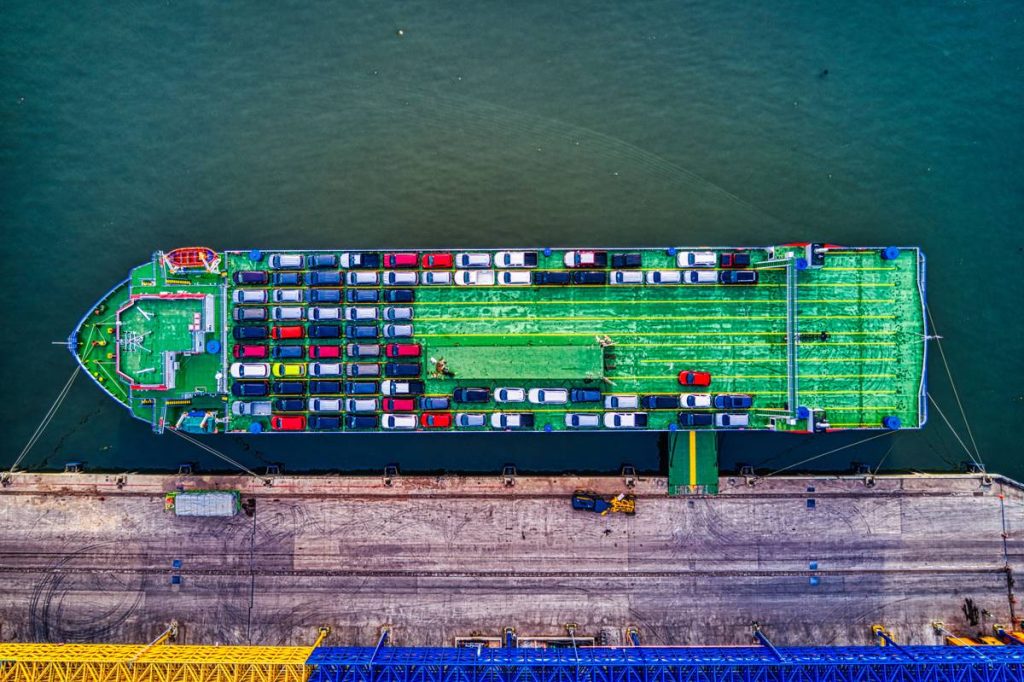
EU imports of hybrid cars from China rose from 3,800 units in October 2024 to about 50,000 in July 2026, more than thirteenfold in twenty one months. A battery electric car from a carmaker can reach Rotterdam facing about 27 per cent all in duty, while its plug-in hybrid from the same carmaker faces 10 per cent. The tariff code creates the gap, not the product.
Tariffs move production rather than stop it, and Europe’s supply chain is being rebuilt around where tariff lines fall.
In October 2024, the European Union imposed definitive countervailing duties on Chinese battery electric vehicles for five years. Tesla’s Shanghai output received 7.8 per cent, BYD 17 per cent, Geely 18.8 per cent, and SAIC plus non cooperating producers 35.3 per cent. Each charge sat above the standard 10 per cent most favoured nation duty. The resulting totals ranged from 17.8 to 45.3 per cent.
Hybrids and plug-in hybrids were outside that investigation. They remained at the 10 per cent standard duty, and plug-in hybrids entered under a different tariff code. From the summer of 2025, BYD and MG redirected their European model strategy towards plug-in hybrids. EU imports of hybrid cars from China rose from 3,800 units in October 2024 to about 50,000 in July 2026. That was more than thirteen times higher in twenty one months, while average unit prices fell.
Eurostat recorded 56,706 Chinese-made plug-in hybrids entering the EU in 2022, compared with 217,764 between January and July 2026. Chinese full hybrids rose from 659 units in 2022 to 160,662 in those seven months of 2026. Chinese brands’ share of European plug-in hybrid sales increased from 2.5 per cent to 13.7 per cent in twelve months.
Chinese makers held about 3 per cent of the whole European car market in 2023, 6.1 per cent in 2025 and 9.2 per cent in the first half of 2026. They are on course to sell more than one million cars in Europe in 2026 for the first time. BYD became Germany’s best-selling plug-in hybrid brand in May 2026, with 4,290 registrations.
For a planner at a European Tier 2 supplier, the change appears in the working week. The customer mix changes every quarter. A volume forecast is revised twice. A part that once competed mainly on cost now requires a tariff code review before its destination is confirmed. The planner checks whether a component supports a battery electric programme, a plug-in hybrid programme or both. The spreadsheet carries a commercial, customs and capacity question in the same row. The duty rate changes the vehicle mix, and the vehicle mix changes the forecast.
The 2024 duties created the challenge. The hybrid pivot created the struggle. In September 2026, the EU asked China to hold Chinese built hybrids to roughly 15 per cent of the segment. Brussels said that a refusal would lead to a ceiling imposed through temporary safeguard tariffs, which do not require proof of unfair trade practices. A European official described the approach as managed trade intended to stop deindustrialisation.
China publicly rejected a voluntary export restraint. Its stated position was that quantity limits violate World Trade Organization rules, while it would do what was necessary to protect Chinese businesses. The wider trade context included a deficit of about 1.18 billion euros a day.
On Friday 9 October 2026, the EU announced an understanding with China after talks in Beijing between trade commissioner Maros Šefčovič and Chinese commerce minister Wang Wentao. Šefčovič said Chinese exports of hybrids and plug-in hybrids to the EU could fall by more than half, preventing several million cars from being exported over four years. He called it the first time China had accepted moderated exports without a prior trade conflict.
The sixteen-point package also covers faster export licences for rare earths and permanent magnets, plus about 4 billion euros of EU exports to China, including car parts, olive oil and footwear. Talks on cars continue, with the next round scheduled for March 2027. One mechanism under discussion is a company price undertaking, which would set minimum prices for Chinese cars sold in Europe.
A voluntary export restraint sets a quantity and is agreed rather than imposed, making it effectively unchallengeable at the World Trade Organization. Price undertakings are expressly allowed under the World Trade Organization subsidies agreement. In February 2026, the European Commission accepted one from Volkswagen Anhui for the Cupra Tavascan, built in China and sold under a Spanish marque. It combined a minimum import price with an annual maximum quantity, defined sales channels, reporting duties and vehicle traceability.
Europe is changing its own production rule in parallel. The Industrial Accelerator Act, proposed in March 2026 as a Made in Europe measure, would require publicly funded or subsidised electric and plug-in hybrid vehicles to be assembled in the EU with at least 70 per cent of their non-battery components sourced locally. Non-EU investments above 100 million euros in strategic industries would face screening, with approval tied to technology sharing and local sourcing. Investors from free trade partners would be exempt, but China is not among them. The electric vehicle rules would apply around mid 2027, and the other provisions from 1 January 2029.
The segment left outside the tariff wall is now inside a quantity ceiling, while the local content rule will decide where European components come from after 2027. Planners should map every component to its tariff code, origin and vehicle programme before the next forecast revision. Executives should model quantity ceilings, minimum prices and the 70 per cent local sourcing threshold together, because the tariff line and the factory location now determine the same commercial decision.