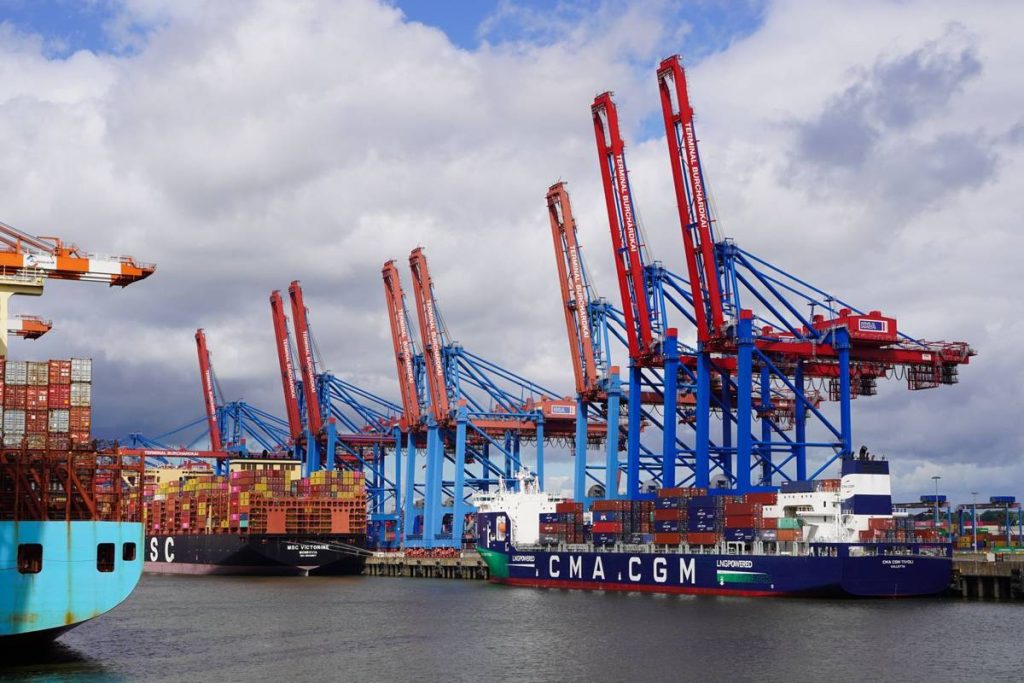
One man sat on both sides of the logistics counter. As the controlling owner of Kuehne + Nagel, Klaus-Michael Kuehne ran the world’s largest sea and air freight forwarder, the middleman that books space on other people’s ships. As the largest single shareholder of Hapag-Lloyd, he also owned a piece of the ships themselves. Kuehne, who died on Monday at the age of 89 at his home in Schindellegi, Switzerland, was the only figure in global logistics who straddled that divide. Nobody else held that seat. Nobody else could.
Kuehne was the last great owner-builder of global logistics. His passing turns a personal empire into an institutional question, and the answer will shape both forwarding and container shipping for a decade.
An Empire Built in Three Generations
Kuehne + Nagel began in Bremen in 1890, founded by his grandfather August Kuehne and Friedrich Nagel as a small forwarding house moving grain through the Port of Hamburg. Kuehne joined the family firm as a junior partner in 1963 and took control of the executive board three years later, at the age of 30. Under his hand the company grew into a multinational logistics group with more than 1,300 offices and roughly 88,000 employees, ranked first in the world in both sea and air freight.
His ownership story was as dramatic as the growth. In 1992 he bought the company back after it had slipped from family control, paying 340 million marks, and listed it on the stock exchange two years later. Through Kuehne Holding AG, founded in 1993, he held roughly 53% of the group until the end.
His shipping side was equally substantial. During the 2008 financial crisis, when container shipping was bleeding cash, Kuehne stepped into Hapag-Lloyd through the Albert Ballin consortium, becoming the anchor of a rescue that kept the Hamburg liner German-owned. He raised his stake over the years to roughly 30%, making him the largest single shareholder. He was also the biggest individual investor in Lufthansa, holding about a fifth of the airline, alongside stakes in chemical logistics group Brenntag and mobility company Flix.
The Human Bridge
None of this was a passive portfolio. Kuehne was the rare majority owner who could move strategy with a phone call. Competitors found the combination unnerving: a forwarder that could see carrier pricing from the inside, and a carrier shareholder who understood exactly what forwarders would accept. His seven decades with the company spanned handwritten forwarding documents, the containerization revolution, digital control towers, and the first serious AI deployments in freight. Few executives in any industry have watched their field change that completely.
The Succession Question
The story now is what comes next. Kuehne was childless, and much of his fortune had already been placed in the Kuehne Foundation, whose board includes his wife Christine and longtime confidants. Through the foundation’s control of the holding company, an institution now becomes the predominant owner of the world’s largest forwarder and of a decisive stake in one of the top container lines.
That changes the personality of the ownership even when the shareholding stays identical. A foundation does not have instincts, alliances, or a succession drama of its own. It has a mandate, governance, and a different time horizon. Markets will read every board appointment, every dividend decision, and every deal rumor through that lens.
Three Ripples to Watch
First, Kuehne + Nagel’s deal machine. Under Kuehne the group stayed aggressive, most recently preparing an IPO path for its Apex Logistics arm and watching its rival DSV grow through acquisitions. A foundation-led holding may prove more patient or more demanding of dividends; either way, the pace of consolidation moves will be watched closely.
Second, Hapag-Lloyd’s governance. A stable long-term owner holding 30% was a pillar of the liner’s strategy as alliances shift and the industry debates new consolidation. How that stake is represented, and how it votes on capital allocation and partnerships, matters far beyond Hamburg.
Third, the industry’s center of gravity. Kuehne was one of the last giants who built modern logistics from a family firm. His passing asks an uncomfortable question: does the industry still produce owner-builders, or only managers of inherited scale? The answer will determine not just who controls Kuehne’s empire, but who builds the next one.
Watch the Boardrooms
The obituaries will fade this week. The governance story will run for years. The first signals of what comes next will come from the Kuehne Foundation’s choices, not from press releases: who sits on the holding board, how the two great companies coordinate, and whether the era of the shipping-forwarding bridge survives its architect.
Kuehne built an empire that straddled both sides of the counter. The question he left behind is whether the structure he built can outlast the man who held it together. Global logistics will spend the next decade answering.