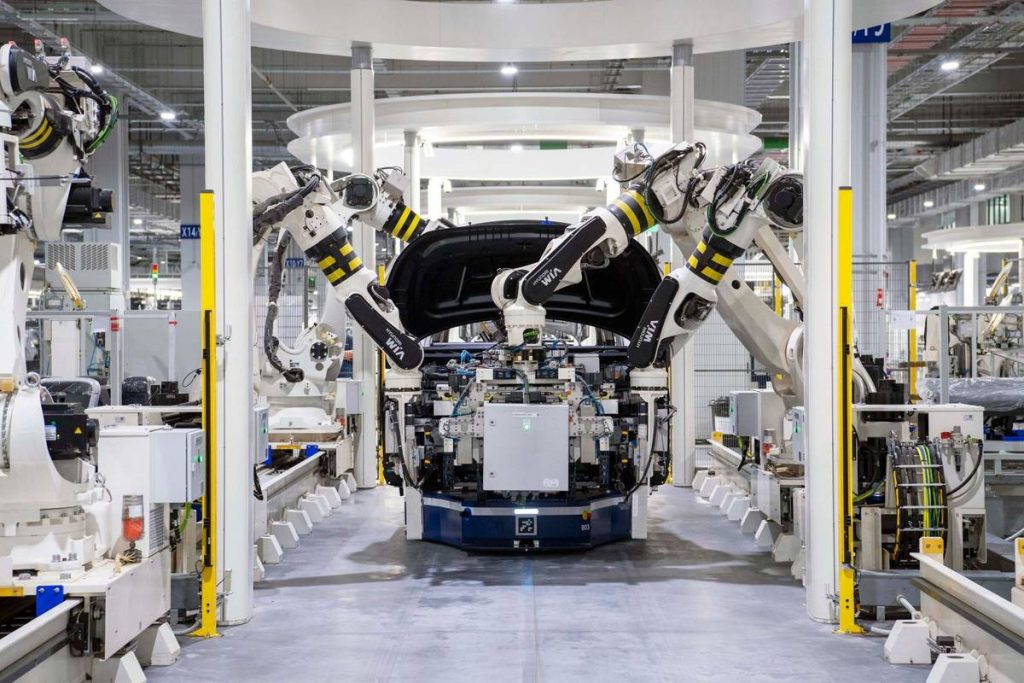
General Motors did not announce a new electric vehicle this week. It did not announce a new battery plant or a new robot. It announced a $4.5 billion financing agreement, and in the long history of automotive announcements, that may be the most telling one yet.
The filing describes a purchasing facility built around a company most people have never heard of, Procura Auto Parts, funded by a bank syndicate led by JPMorgan Chase and Banco Santander. The banks will prepay selected suppliers on GM’s behalf. GM, in return, issues formal promises called irrevocable payment undertakings, or IPUs, to settle the bills after the parts are actually used in production, no later than July 31, 2029.
Read that slowly. GM is paying suppliers before they deliver. Not after delivery, not on net-60 terms. Before.
The core message is simple: automakers are shifting from just in time to just in case, and they are paying someone else to carry the inventory and the risk.
Why now? The bill of pain is long. In October 2025, Ford paused production of five truck models after a factory fire took a crucial aluminum supplier offline. Tariffs have redrawn sourcing maps. The push to move away from Chinese suppliers is forcing automakers to qualify new vendors in the middle of a production cycle. And the scars of the semiconductor crisis are still fresh, when the industry learned that a $200 chip can stop a $50,000 truck.
The parts GM will target are undisclosed, but the usual suspects are named in the filing: dynamic random access memory, rare earths, and wire harnesses. The common thread is that each has a long lead time, few qualified suppliers, and catastrophic downside if it disappears.

Here is the part that matters for every supply chain professional. The structure is engineered so that GM’s inventory costs stay off its books. Prepayments appear as an asset. Each payment undertaking is booked as unsecured debt. The cash flows are shown as if GM paid suppliers directly, and the costs are recorded within 90 days of purchase, excluded from adjusted free cash flow until the inventory is actually bought.
Translation: GM gets a buffer stock without carrying the buffer. Suppliers get cash before they produce. The banks take the credit risk. And a supply chain management firm runs the whole machine.
Consider the supplier for a moment, because this is where the shift bites. A mid-size wire harness maker has been living on the edge for years. Every customer wants just in time delivery, which means the supplier must hold the safety stock, finance it with expensive short-term credit, and pray the OEM actually orders. One cancelled program, and the warehouse of parts becomes a warehouse of debt.
Under the new model, that same supplier receives prepayment before the first part is stamped. The cash arrives, the stockpile grows, and the borrowing cost disappears. For a supplier that has spent a decade financing someone else’s resilience, that is not a small change. It is the difference between being the buffer and being paid to be the buffer.
The deeper story is a confession. Just in time was built on the assumption that disruptions are rare and short. The last five years dismantled that assumption: a pandemic, a war, a canal blockage, a factory fire, tariffs, and a chip shortage that lasted longer than some vehicle lifecycles.
Each disruption taught the same lesson. The company that owns the inventory survives. The company that owns only the promise suffers. GM’s announcement is the first time a major automaker has institutionalized that lesson in its financing structure, with a third party, a bank syndicate, and a deadline seven years out.
GM said it plainly in its statement: “Our industry has experienced significant supply chain disruptions in the past for various reasons, and it’s safe to assume they will happen in the future. This program will help ensure that we are prepared for multiple scenarios.”
So the question for every procurement and supply chain leader is simple. Who finances the buffer in your chain? Do your suppliers borrow at 12 percent so you can run at 99 percent service level? Or are you willing to pay for readiness the way GM just did?
The automaker that invented the assembly line just redefined who pays for the safety net. The rest of the industry is now deciding whether to keep financing resilience with someone else’s balance sheet, or to do what GM did: put a price on readiness, and pay it.