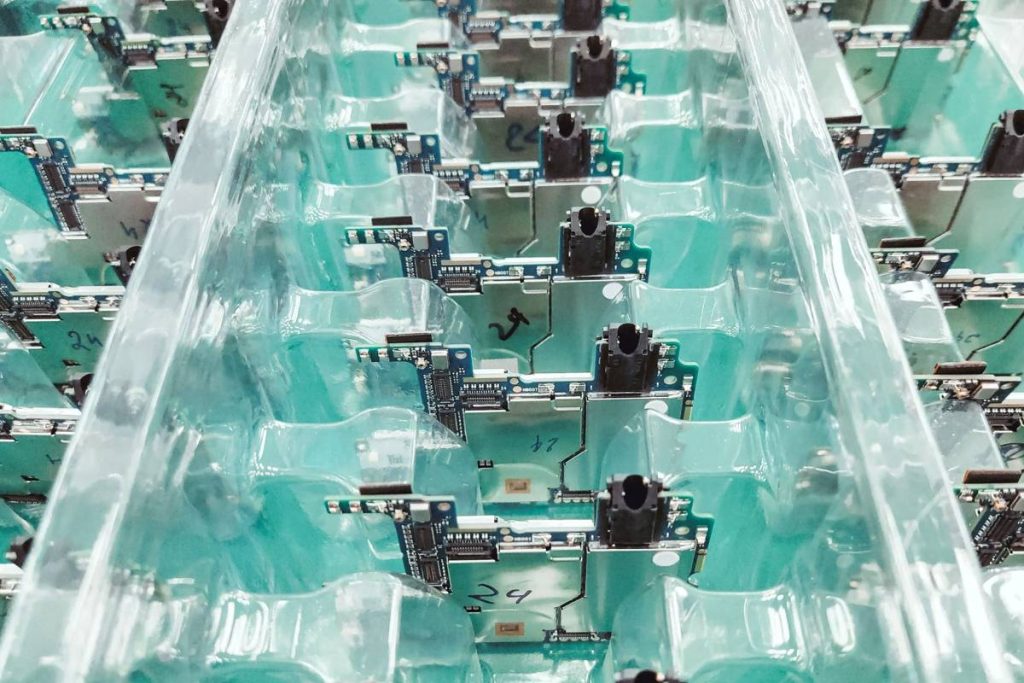
Last month, Nissin Foods announced something quietly remarkable. The company behind Cup Noodles expects significantly higher fill rates this year, not because it built new factories or hired more planners. It credited an AI-powered demand and supply planning tool. At the exact same moment, somewhere in the global electronics supply chain, a mid-sized automotive parts manufacturer was told its memory chip order would face a 52-week lead time. The reason? Every available wafer was feeding the AI data center boom.
This is the paradox sitting at the center of every supply chain conversation right now. AI is making some supply chains dramatically smarter while simultaneously starving others of the physical components they need to function.
The Two Faces of AI Demand
Nissin’s story is genuinely impressive. The company integrated AI forecasting into its planning cycles and immediately saw improvements in both accuracy and fill rates. Products reach shelves more reliably. Planners spend less time guessing and more time acting. Waste drops. Margins rise. It is the textbook case of what AI promises supply chain leaders: visibility, precision, speed.
But look downstream and the picture flips. The same technology driving Nissin’s efficiency, the large language models, the GPU clusters, the hyperscale data centers, is consuming semiconductors at an unprecedented rate. A single NVIDIA H100 GPU contains 80 billion transistors and requires advanced memory chips manufactured on processes that only a handful of fabs on Earth can run. Every new data center campus announced in Virginia, Ireland, or Singapore represents millions of chips diverted from automotive, industrial automation, and consumer electronics supply chains.
The Memory Chip Squeeze
The Loadstar recently reported that the AI sector’s appetite for memory chips is now actively disrupting supply chains in other industries. Companies that have nothing to do with artificial intelligence are scrambling for new suppliers, facing scant availability, long wait times, and soaring costs. Procurement teams accustomed to negotiating on price are suddenly negotiating for survival, competing against trillion-dollar tech companies that can outbid them by an order of magnitude.
Consider the automotive sector. Modern vehicles contain over a thousand semiconductor chips. A single electric vehicle can require twice that. As one industry observer put it, cars have become computers on wheels. When the AI industry books every available wafer at TSMC for the next eighteen months, “computers on wheels” get pushed to the back of the line.
The Planner’s Dilemma
Here is where it gets personal. Picture a demand planner at a European auto parts supplier. Her company spent eighteen months and six figures implementing the same kind of AI forecasting tool that Nissin uses. Her forecasts are sharper than ever. She can predict with 94 percent accuracy what her customers will need in Q3. There is just one problem: her most critical component, a specialized memory controller, is now on allocation. The supplier can deliver 40 percent of what she needs. Her AI system flags the stockout risk instantly. It sends alerts, generates reports, and recommends mitigation strategies. But it cannot manufacture chips.
She is more informed than any planner in her company’s history and more powerless than she has been in a decade.
A Story in Three Acts
A logistics director at a midwestern US distribution company told me something that captures this perfectly. Two years ago, his biggest headache was forecasting error. His team would over-order by 15 percent on seasonal items and run out of fast movers. They invested in an AI planning module. Within six months, forecast accuracy jumped from 78 percent to 91 percent. Inventory carrying costs fell by 12 percent. He described it as the best technology investment his company ever made.
Then the chip shortage hit their hardware suppliers. The handheld scanners their warehouse workers use every day, the RFID readers on their dock doors, the edge computing units that run the AI planning module itself, all went on backorder. His AI system could predict demand perfectly. His warehouse could not physically process it.
He realized something he never expected: AI had optimized his digital supply chain while dismantling his physical one. The tool that saved him millions was also, indirectly, the reason his workers were resorting to manual counts and paper pick lists for the first time in fifteen years.
What This Means
The lesson is not that AI is bad. The lesson is that supply chain resilience in the AI era requires thinking about both sides of the equation simultaneously. Every efficiency gain from AI must be weighed against the downstream component risk that AI itself creates. Diversifying chip suppliers, building buffer stock of critical electronics, and designing systems that can run on older, more available hardware are no longer IT decisions. They are supply chain strategy decisions.
The planner with the perfect forecast and the empty shelf is not a hypothetical. She is the present. The only question is whether your supply chain strategy sees both halves of the picture, or just the optimized one.