What Under Armour’s SKU Reduction Tells Every Supply Chain Leader
There is a question every supply chain leader should be asking right now, and it has nothing to do with tariffs or freight rates. It is this: how many of your SKUs are actually earning their place?
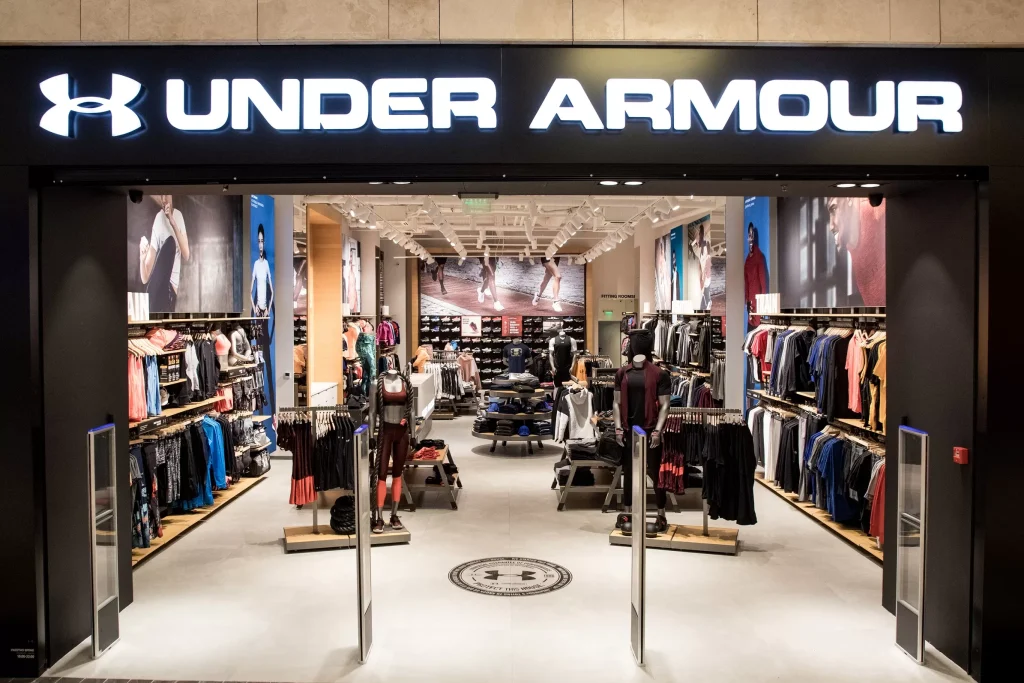
Under Armour just answered that question with conviction. The sportswear retailer reached its goal of cutting 25% of its SKUs over the last two years, as part of a broader effort to build a more disciplined inventory management strategy. That is not a small trim around the edges. That is a structural decision, a statement of intent and frankly, a lesson the entire industry should absorb.
I have spent years watching companies chase growth through product proliferation. The logic sounds reasonable at first: more SKUs mean more shelf presence, more consumer choice, more revenue opportunity. But what this thinking consistently underestimates is the compounding cost that complexity introduces at every single node of the supply chain. More variants mean more forecasts to maintain, more purchase orders to manage, more warehouse locations to slot, more supplier relationships to coordinate, and more markdowns to swallow when demand does not show up as expected. Complexity is not free. It never was.
What Under Armour has done is put a number on the discipline. And the framing matters enormously. CFO Reza Taleghani was precise about it on the earnings call: this is not just lower inventory, but better inventory, with improved quality driven by tighter buys, a more focused assortment, and stronger alignment with demand. That distinction between lower and better is everything. You can lower inventory by simply not buying. That is not strategy, that is reaction. Building better inventory requires you to understand which products carry real demand signal, which ones are cannibalizing each other, and which ones exist only because no one had the courage to discontinue them.
CEO Kevin Plank reinforced this with the phrase “fewer, better products,” signaling that further reductions are planned as the company continues to concentrate on demand and simplify its supply chain. Two words. Fewer & Better. Any supply chain professional worth their experience should have those two words printed somewhere visible.

This is not an Under Armour story in isolation. A quiet but significant movement is underway across retail. Dollar General has cut more than 1,500 SKUs over the last several years, and CEO Todd Vasos has called SKU reduction a “big win” as the company prioritizes goods with faster turnaround times. Bath and Body Works has gone further, deciding to exit entire product categories after its own leadership acknowledged that customers found the store “too overwhelming and confusing.” Lowe’s was on pace to reach a goal of cutting 15% of its SKUs by the end of 2025. These are not struggling companies making desperate cuts. These are deliberate portfolio decisions made by leadership teams that finally got honest about what their supply chains could support with excellence.
The supply chain implications of SKU rationalization run deeper than most finance driven analyses capture. When you reduce your active SKU count meaningfully, you concentrate volume on fewer items. Concentrated volume improves forecast accuracy, because statistical models perform better with more signal and less noise. Better forecast accuracy reduces safety stock requirements. Reduced safety stock frees working capital. Freed working capital improves cash conversion. And all of this happens before you even account for the operational savings: fewer production changeovers, simplified transportation lanes, reduced packaging complexity, and shorter supplier qualification lists.
There is also a supplier relationship dimension that rarely gets the attention it deserves. When you bring fewer SKUs to your key suppliers, you become a more valuable customer. You negotiate from a position of consolidated volume rather than fragmented spend. Lead times improve. Quality attention increases. Innovation conversations become possible. The economics of supply chain partnership fundamentally shift in your favor.

The harder truth, though, is that SKU rationalization is a test of organizational discipline rather than analytical capability. Most companies already know which products are underperforming. The data is usually sitting in a report that nobody acts on. The real barrier is commercial: sales teams that believe every SKU represents a revenue opportunity they cannot afford to lose, marketing teams attached to launches they championed, and leadership that has not clearly prioritized simplicity as a strategic value.
Under Armour’s two-year journey to reach the 25% reduction target is a reminder that this work requires sustained commitment. The company had initially set this goal back in 2024, meaning the ambition had to survive budget cycles, leadership scrutiny, and the natural organizational resistance to discontinuing products. That persistence is as important as the analytical work.
The supply chains that will perform best over the next decade will not be the ones with the most products. They will be the ones that have built the organizational muscle to say no. No to the line extension that adds complexity without proportional value. No to the regional variant that fragments volume. No to the promotional SKU that never retires.
Fewer, better products. It is not a retreat. It is a strategy. And the companies embracing it are not shrinking their ambitions. They are sharpening them.