In supply chain management, success breeds success. The companies that excel today are positioning themselves to dominate tomorrow, while struggling organizations fall further behind. This phenomenon, known as the Matthew Effect, reveals a fundamental truth about competitive advantage in modern logistics and operations.
Understanding the Matthew Effect in Supply Chains
The Matthew Effect takes its name from a biblical passage: “For to everyone who has, more will be given.” In business terms, this means organizations with robust supply chains attract more resources, talent, and opportunities, accelerating their lead over competitors. Meanwhile, companies with weaker operations face mounting challenges that compound over time.
Consider how Amazon revolutionized retail logistics. Their early investments in warehouse automation, predictive analytics, and delivery infrastructure created competitive advantages that became self-reinforcing. Each improvement attracted more customers, generating data and revenue to fund further innovations. Today, competitors struggle to match capabilities Amazon built systematically over decades.
This dynamic plays out across industries. Leading manufacturers secure preferential treatment from suppliers. Top retailers negotiate better terms with logistics providers. Innovative companies attract the best supply chain talent. Each advantage builds upon the last, creating momentum that’s difficult for rivals to overcome.
Why Supply Chain Excellence Compounds
The compounding nature of supply chain success stems from several interconnected factors. First, strong operations generate higher margins, providing capital for strategic investments. Companies can modernize facilities, implement advanced technologies, and expand their networks while competitors operate on thin budgets.
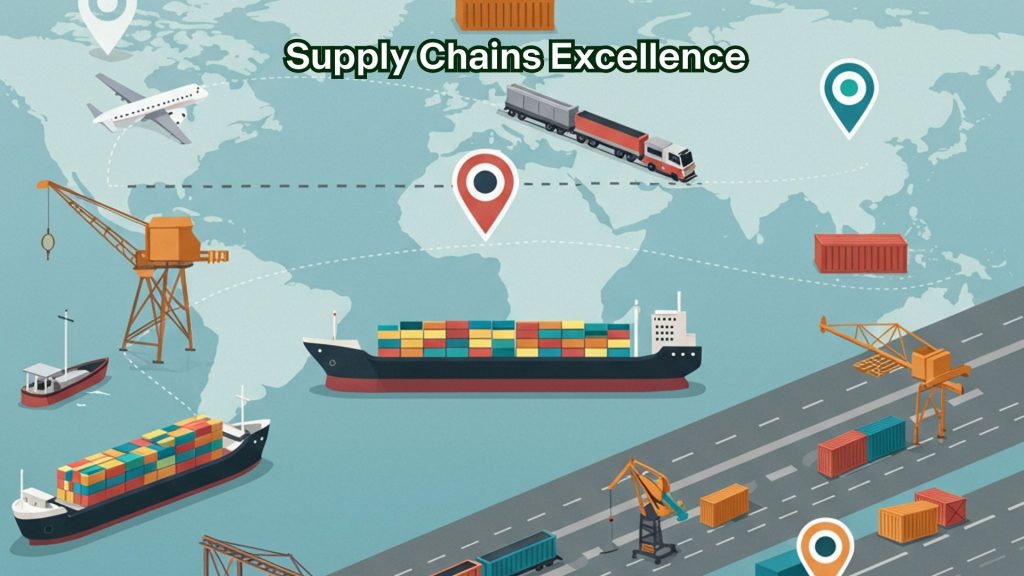
Second, operational excellence attracts partnerships. Suppliers prioritize reliable customers who pay on time and provide steady volume. Logistics providers offer preferential pricing and capacity to shippers with consistent demand. These relationships become competitive moats that rivals cannot easily breach.
Third, data advantages multiply. Sophisticated supply chains generate rich information about customer behavior, demand patterns, and operational performance. This intelligence enables better forecasting, inventory optimization, and strategic planning. As data accumulates, decision-making improves, creating a virtuous cycle of enhancement.
Fourth, talent gravitates toward success. The most skilled supply chain professionals want to work for industry leaders using cutting edge technologies and innovative practices. This concentration of expertise drives further innovation, widening the gap between leaders and laggards.
Breaking the Cycle: Strategies for Supply Chain Transformation
While the Matthew Effect seems daunting, it’s not insurmountable. Organizations can break negative cycles and build positive momentum through focused strategies and disciplined execution.

Start by identifying your unique strengths. Every company has assets that can become foundations for competitive advantage. Perhaps you serve a specific market exceptionally well, maintain strong supplier relationships in a critical category, or possess deep expertise in a particular logistics challenge. Build from these strengths rather than trying to match competitors across every dimension.
Invest strategically in technology. You don’t need to implement every innovation simultaneously. Focus on solutions that address your most pressing bottlenecks or unlock significant customer value. Cloud-based systems, visibility platforms, and automation technologies have become more accessible, allowing mid-sized companies to deploy capabilities once reserved for industry giants.
Cultivate supplier partnerships deliberately. Rather than treating vendors as interchangeable commodities, develop collaborative relationships with key partners. Share forecasts, align on quality standards, and work together to solve problems. Strong partnerships can level the playing field against larger competitors with more buying power.
Develop your people systematically. Training programs, mentorship, and career development create capabilities that compound over time. As your team’s skills grow, they’ll identify opportunities and solve problems more effectively, generating improvements that cascade throughout your operations.
Embrace transparency and continuous improvement. Organizations that honestly assess their performance and systematically address weaknesses can progress rapidly. Create feedback loops that surface issues quickly, empower teams to implement solutions, and celebrate learning from failures as much as celebrating successes.
The Future Belongs to the Bold
The Matthew Effect in supply chains will likely intensify as technology advances and global competition increases. Artificial intelligence, automation, and real-time visibility platforms will separate leaders from followers more starkly than ever. However, this reality should inspire action, not a stalled position.

Every market leader today was once a challenger. Every innovative practice was once untested. The companies that will dominate tomorrow’s supply chains are making bold investments and tough decisions today. They’re building capabilities systematically, fostering cultures of excellence, and refusing to accept mediocrity.
Your organization can join their ranks. The path requires vision, commitment, and persistence, but the rewards justify the effort. Strong supply chains create value for customers, opportunities for employees, and returns for stakeholders. They build resilience against disruptions and create options in uncertain times.
The question isn’t whether the Matthew Effect exists in supply chains. It clearly does. The question is which side of the equation you’ll occupy. Will your supply chain grow stronger each year, compounding advantages into market leadership? Or will you watch competitors pull away, wondering what might have been?
The choice is yours. Start today. Build momentum. Let the Matthew Effect work for you instead of against you. Your future competitive position depends on the decisions and investments you make right now.
1 thought on “The Matthew Effect: Why Strong Supply Chains Keep Getting Stronger”