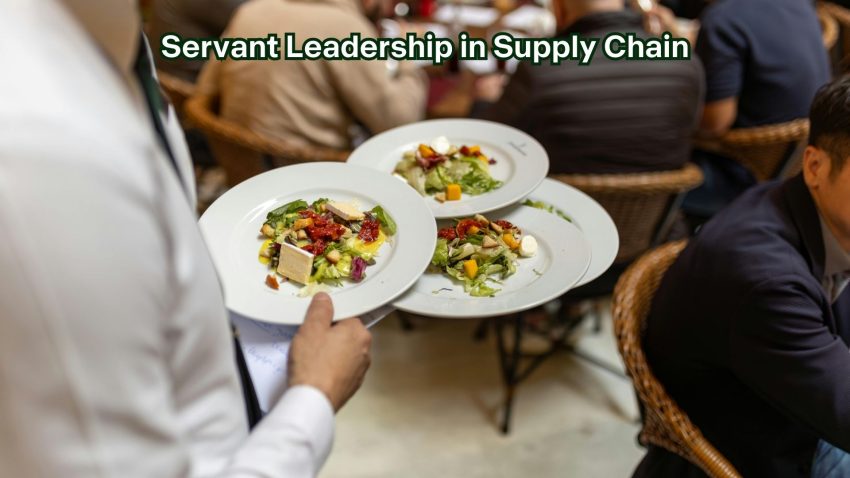
When you sit down at a fine restaurant, you rarely think about the intricate coordination happening behind the scenes. A great waiter makes the experience feel effortless: taking your order, communicating your preferences to the kitchen, managing your expectations, and delivering your meal with a smile. But what you’re actually witnessing is a masterclass in servant leadership.
Now apply that same lens to supply chain management. The similarities are striking and the lessons are transformational.
The Waiter Analogy: Supply Chain as the Bridge Between Customers and the Kitchen
In a restaurant, the waiter is the critical link between two very different worlds: the customer sitting at the table and the kitchen producing the food. Customers have needs, preferences, and expectations. The kitchen has capabilities, constraints, and processes. Without the waiter, these two worlds would never align.
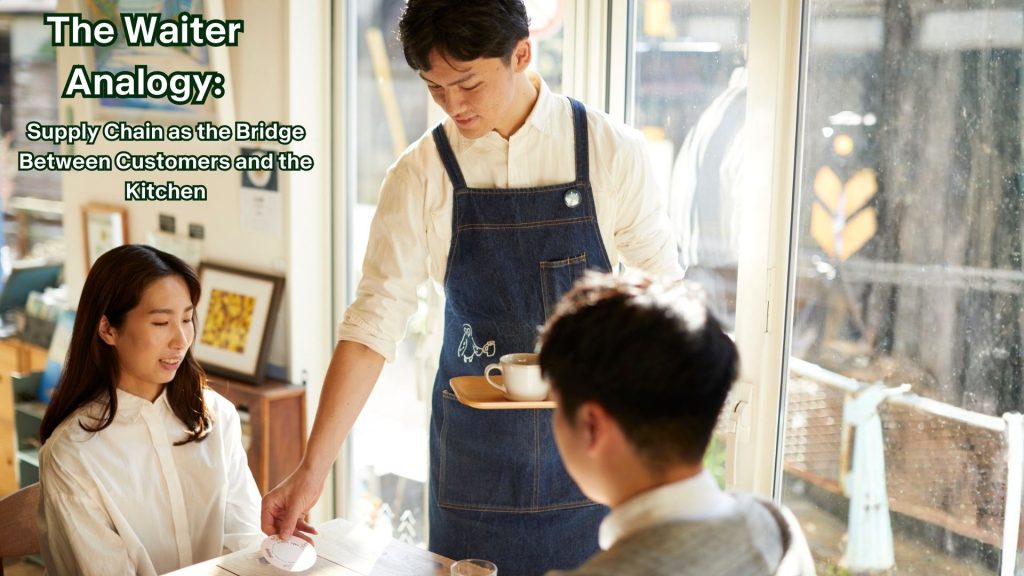
Supply chain professionals occupy the exact same role in a business. On one side, you have customers with demand signals, delivery expectations and quality requirements. On the other, you have suppliers, manufacturers, and production facilities (the kitchen), each operating within their own limitations and rhythms. Supply chain sits in the middle, translating, coordinating and making it all work.
This is where servant leadership becomes not just a management philosophy but an operational imperative.
What Is Servant Leadership in Supply Chain?
Servant leadership is a leadership approach where the primary goal is to serve others: to remove obstacles, build capability and put the needs of customers and colleagues before personal or departmental interests. In supply chain, this means the team’s success is measured not by internal metrics alone but by how well it enables the entire value chain to perform.
A servant leader in supply chain doesn’t ask, “How does this decision make my department look?” They ask, “How does this decision help the customer get what they need and help our suppliers and production teams deliver it?”
Taking the Order: Listening to Customer Demand
A good waiter listens carefully. They clarify the order, ask about allergies, understand preferences, and set realistic expectations. They don’t promise a 5-minute steak or overpromise on a complex dish when the kitchen is occupied.

In supply chain terms, this is demand management and customer collaboration. Servant leaders in supply chain invest heavily in understanding what customers actually need, not just what was forecasted six months ago. They build Sales and Operations Planning (S&OP) processes that bring the voice of the customer into every planning decision. They communicate transparently about lead times and inventory constraints, setting honest expectations rather than overpromising and underdelivering.
Communicating with the Kitchen: Bridging Operations and Suppliers
A waiter who doesn’t communicate with the kitchen creates chaos. Special requests get missed. Timing falls apart. The customer suffers. A great waiter translates customer needs into language the kitchen can act on, advocating for the customer without overwhelming the chefs.
Supply chain professionals do the same when they work with suppliers and production teams. Servant leaders translate commercial priorities into operational reality. They advocate for customers inside the organization, pushing procurement to secure the right materials, working with manufacturing to prioritize the right production runs, and giving suppliers the visibility they need to plan effectively.
This is the essence of supply chain collaboration: creating shared visibility, shared purpose, and shared accountability across the entire network. Servant leaders don’t hoard information or protect territory. They share demand signals upstream, production constraints downstream, and bring both sides of the table into alignment.
Managing the Unexpected: Agility Under Pressure
Even in the best restaurants, things go wrong. An ingredient runs out. A dish takes longer than expected. A table of ten arrives without a reservation. The best waiters handle disruption with calm, transparency and creativity by quickly communicating to the customer what happened and offering a solution.

Supply chain disruptions, port delays, supplier shortfalls, demand spikes, are the equivalent of a restaurant in trouble. Servant leaders in supply chain are defined by how they respond to these moments. Do they blame the warehouse, the supplier, the customer? Or do they take ownership of the situation, communicate proactively, and focus energy on solving the problem?
Resilience isn’t about avoiding disruption. It’s about serving everyone in the chain: customers, suppliers and internal stakeholders with honesty and urgency when things go sideways.
Clearing the Table: Continuous Improvement and Removing Friction
After the meal, a great waiter clears the table efficiently, checks in on the experience and makes note of what could have gone better. They’re not just focused on this meal: they’re thinking about the next one.
Servant leaders in supply chain are relentless about process improvement. They identify friction points: bottlenecks in the order-to-delivery cycle, inefficiencies in supplier onboarding, gaps in demand visibility and work to eliminate them. They empower their teams to surface problems without fear of blame, creating cultures of psychological safety and continuous learning.
In lean supply chain terms, this is the pursuit of flow, removing waste so that value moves quickly and reliably from supplier to customer.
The Bill: Accountability and Measurement
At the end of the meal, the bill tells the full story. Was the experience worth the cost? In supply chain, servant leaders measure success through customer-facing metrics: on-time in-full (OTIF) delivery, order accuracy, lead time reliability and total cost to serve. These aren’t just numbers, they are a reflection of how well the entire supply chain served its customers.
Conclusion: Serve First, Grow with Service Mindset
The best waiters in the world don’t think of themselves as order-takers. They think of themselves as experience architects and they lead every interaction with a service mindset. The best supply chain leaders operate the same way.
By embracing servant leadership, supply chain professionals can transform their function from a cost center into a strategic value driver, one that genuinely bridges customers with the capabilities of the business. Because at the end of the day, in a restaurant or in a global supply chain, everything starts and ends with service.